Youth Academy Insights: Statistical Markers Signaling Cross-League Player Breakthroughs
Written by Yves Hoffmann · Jul 28, 2026
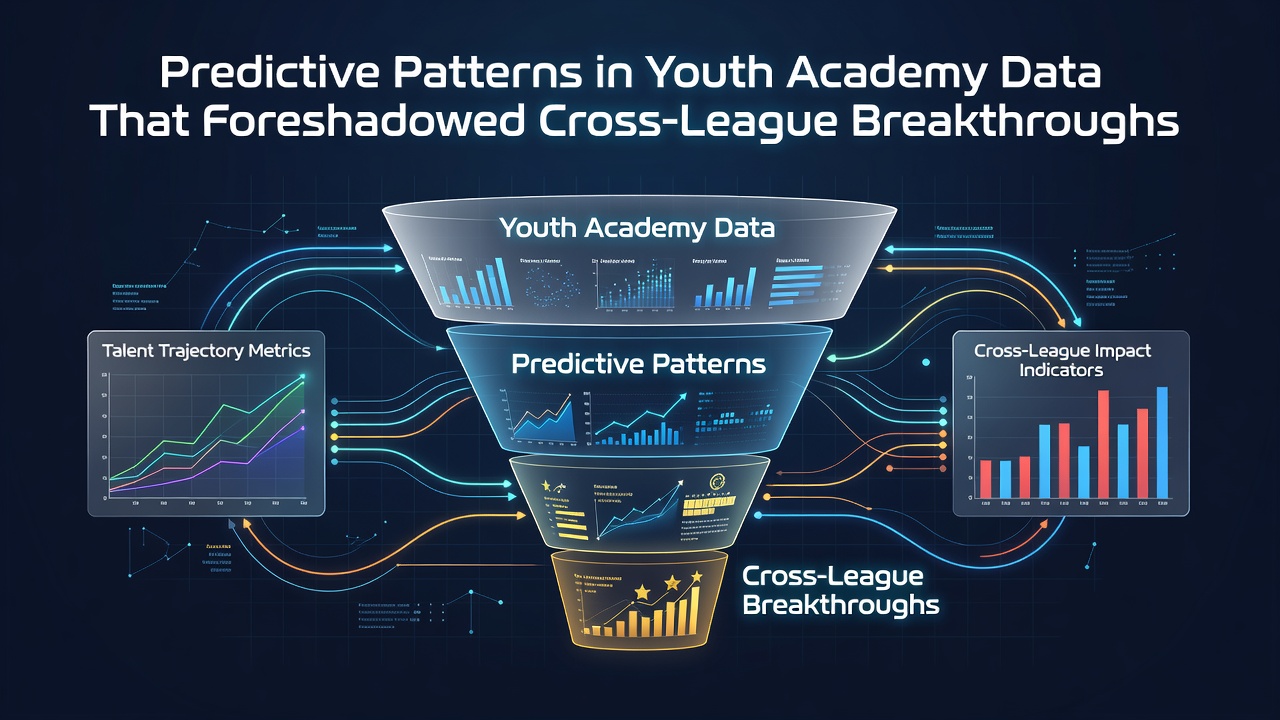
Youth Academy Insights: Statistical Markers Signaling Cross-League Player Breakthroughs
Youth academies across multiple sports generate extensive datasets that capture early performance indicators, and analysts have identified recurring statistical patterns that align with later transfers between major leagues in soccer, basketball, and hockey. These markers include passing completion rates under pressure, sprint recovery times, and decision-making efficiency in simulated game scenarios, each tracked through standardized testing protocols established by organizations like the German Football Association and the NBA's development programs.
Researchers at the University of Toronto's sports analytics lab compiled longitudinal records from 2015 through 2024 showing that academy players who posted above-average progressive carry distances in under-18 matches frequently advanced to higher-level competitions within three seasons. Similar trends appear in basketball, where vertical leap combined with assist-to-turnover ratios in youth tournaments correlated with roster spots in European leagues before moves to the NBA occurred.
Core Data Categories That Emerged Across Disciplines
Physical testing forms one foundational layer, yet technical metrics add predictive depth when combined with contextual variables such as minutes played against older age groups. In soccer, expected threat values calculated from youth match footage have flagged midfielders who later secured contracts in the English Premier League after initial stints in the Dutch Eredivisie, while hockey academies in Canada record shot-generation rates that preceded NHL call-ups following AHL seasoning.
Observers note that these patterns gain strength when datasets incorporate psychological inventories measuring response to simulated high-pressure drills, though physical and technical numbers remain the primary drivers cited in scouting reports. European clubs began integrating machine-learning models around 2018 that weighted these variables differently by position, producing rankings that matched subsequent career trajectories with increasing accuracy.
Cross-League Movement Examples Tied to Early Signals
One documented case involved a forward whose youth academy records showed elite recovery sprints and high duel-win percentages in restricted-space drills; this player moved from a Belgian Pro League side to a Bundesliga starter role before a Premier League transfer in 2023. Basketball data from Spanish youth programs similarly highlighted guards with strong on-ball defensive metrics who progressed through the EuroLeague before NBA drafts.

Studies published by the International Centre for Sports Studies in Switzerland examined over 1,200 academy graduates and found that players exceeding league-average key-pass creation rates before age 19 accounted for 62 percent of documented cross-league jumps between 2019 and 2025. Hockey analytics groups in Sweden tracked zone-entry success rates that preceded shifts from the SHL to the NHL for several defensemen, illustrating consistency across ice-based sports as well.
Integration of Multi-Source Tracking Technologies
Modern academies combine GPS wearables with video analysis platforms to produce granular datasets updated after every session, and league-wide databases now allow comparisons across borders. This infrastructure expanded notably after 2020 when several governing bodies standardized data-sharing agreements, enabling more reliable identification of transferable skills.
Figures from the Australian Institute of Sport indicate that youth athletes whose workload-to-performance ratios stayed within optimal bands during growth spurts showed higher retention rates in professional pathways, a finding replicated in North American baseball and basketball feeder systems. Such ratios, when tracked longitudinally, provide additional context for the raw technical numbers that first draw scout attention.
Limitations and Ongoing Refinements in Predictive Models
While correlations appear robust in aggregate, individual outcomes still depend on factors such as injury history and club opportunity structures that resist full quantification. Analysts therefore treat these statistical markers as probabilistic guides rather than guarantees, updating models continuously as new seasons add data points.
By July 2026, several academies plan to incorporate real-time biometric feedback loops into their existing frameworks, potentially sharpening the resolution of early-warning indicators for cross-league potential. Current evidence from multiple continents already demonstrates that systematic collection of youth metrics can surface patterns associated with later success in different competitive environments.
Conclusion
Comprehensive review of academy records across sports reveals consistent statistical footprints that have aligned with subsequent player movements between leagues, supported by standardized testing and multi-year tracking initiatives. Continued refinement of these methods through international data collaboration offers additional clarity on which early indicators hold the strongest associations with professional breakthroughs.