Unseen Metrics Transforming Scouting Across World Leagues
Written by Rafael Richter · Jul 31, 2026

Unseen Metrics Transforming Scouting Across World Leagues
Quiet metrics have shifted scouting priorities in professional leagues worldwide, wth data points once overlooked now guiding decisions from draft rooms to transfer windows. These indicators focus on elements like recovery patterns after high-intensity efforts, off-ball positioning efficiency, and micro-decision accuracy rather than traditional stats such as goals or assists. Leagues in Europe, North America, and Asia have integrated these tools since the early 2020s, and observers note continued refinement through July 2026 as clubs prepare for upcoming seasons and international tournaments.
Core Metrics Driving the Change
Data from multiple competitions shows teams prioritizing metrics that capture sustained performance under variable conditions, and researchers at sports analytics centers have documented how these numbers predict long-term contributions better than isolated highlights. For instance, a metric tracking "pressure resistance" measures how often players maintain passing accuracy when opponents close space quickly, while another evaluates "load recovery ratio" by comparing heart rate normalization times between shifts or halves. European soccer clubs adopted similar frameworks first, yet North American leagues in basketball and hockey followed with adaptations suited to their schedules.
One study from an Australian sports research institute linked these quiet indicators to reduced injury rates among drafted prospects, and figures from that work spread to Canadian and U.S. organizations evaluating young athletes. Scouts now cross-reference video with sensor data to confirm patterns, which allows them to identify prospects who sustain output across multiple games rather than peaking in single showcases.
Regional Adoption Patterns
Adoption varies by sport and geography, although common threads appear in how front offices allocate resources. In Major League Soccer and the Premier League, clubs have expanded scouting departments to include analysts focused solely on spatial awareness scores derived from tracking systems. Meanwhile, NBA teams emphasize "help defense anticipation" derived from optical tracking, and NHL organizations track "zone entry success under fatigue" to evaluate prospects from junior leagues. These approaches gained traction after initial pilot programs demonstrated measurable roster improvements.
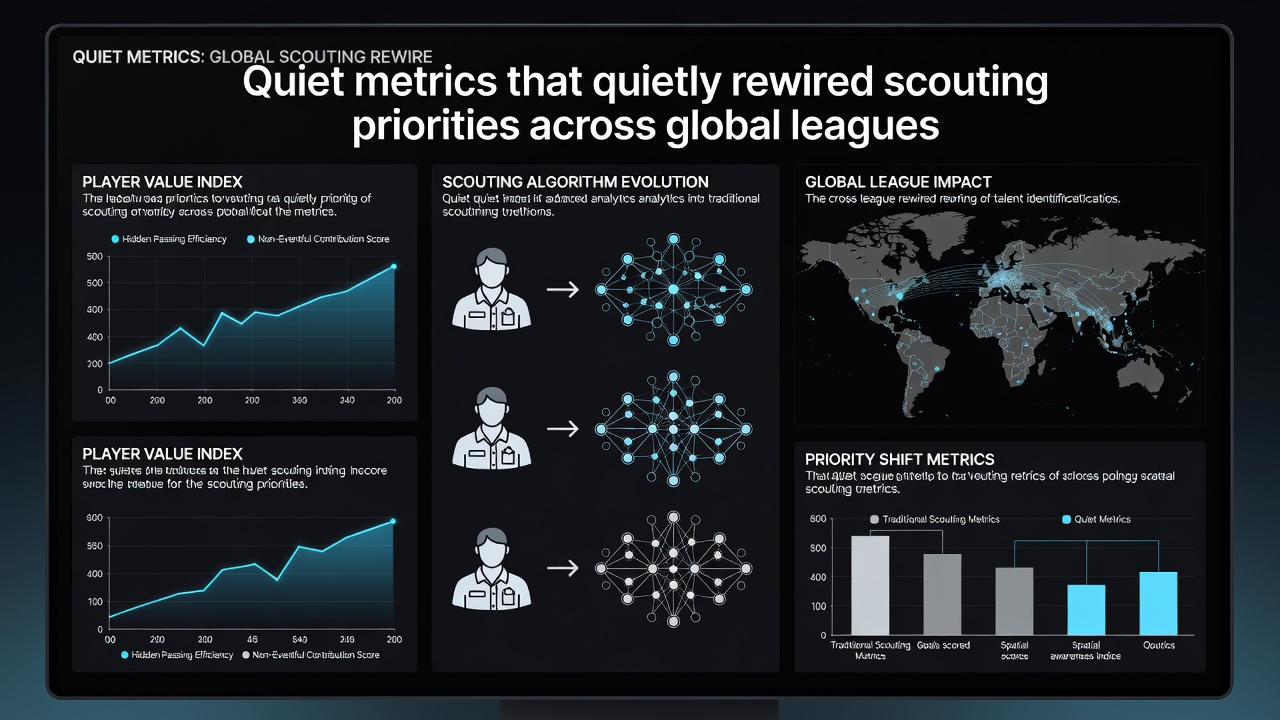
Take one case where a mid-tier Bundesliga side used recovery metrics to sign an overlooked midfielder from a lower division, and that player contributed to consistent mid-table stability over three seasons. Similar stories emerged in Japanese and South Korean baseball leagues where spin-independent pitch command metrics redirected attention toward control specialists instead of raw velocity throwers. Observers note that these quiet signals reward consistency across continents, and data from the 2025-2026 campaigns continues to validate teh shift.
Technology Enabling Wider Use
Wearable devices and camera systems now feed these metrics into centralized platforms accessible to scouting networks, which reduces reliance on subjective tape review alone. Partnerships between leagues and technology providers have standardized collection protocols, and reports from international federations indicate growing alignment on data formats that facilitate cross-league comparisons. This infrastructure supports evaluations of players from diverse academies, including those in emerging markets where traditional statistics remain sparse.
Training facilities in July 2026 have begun incorporating real-time dashboards that display these indicators during matches, allowing coaches and scouts to adjust evaluations on the fly. The result appears in draft strategies that favor athletes demonstrating superior decision density in tight spaces over those with higher raw athletic outputs.
Impact on Player Development Pipelines
Development programs at youth levels have adjusted curricula to emphasize skills tied to these metrics, and academy directors report increased focus on tactical drills that build pressure resistance and efficient recovery habits. Evidence from multiple federations suggests this pipeline adjustment produces more adaptable professionals who transition smoothly into senior environments. Clubs that integrated the metrics early have recorded higher retention rates among academy graduates, according to internal tracking shared in industry roundtables.
Scouting combines now routinely include biometric stations alongside traditional testing, and prospects receive feedback on their load management profiles before signing. This practice extends to women's leagues as well, where similar quiet indicators have highlighted overlooked talents from regional competitions.
Conclusion
Quiet metrics continue to rewire scouting priorities by supplying objective layers that complement visual assessment, and leagues worldwide have embedded them into standard operating procedures. As technology evolves and datasets expand through 2026 and beyond, these indicators are expected to influence contract structures and roster construction even further. The shift reflects a broader move toward evidence-based talent identification that values sustained patterns over momentary flashes.