Turf Wars and Ice Chips: Surface Science Behind Performance Variations in Soccer, Football, and Hockey
Written by Yves Hoffmann · Jun 23, 2026
Turf Wars and Ice Chips: Surface Science Behind Performance Variations in Soccer, Football, and Hockey
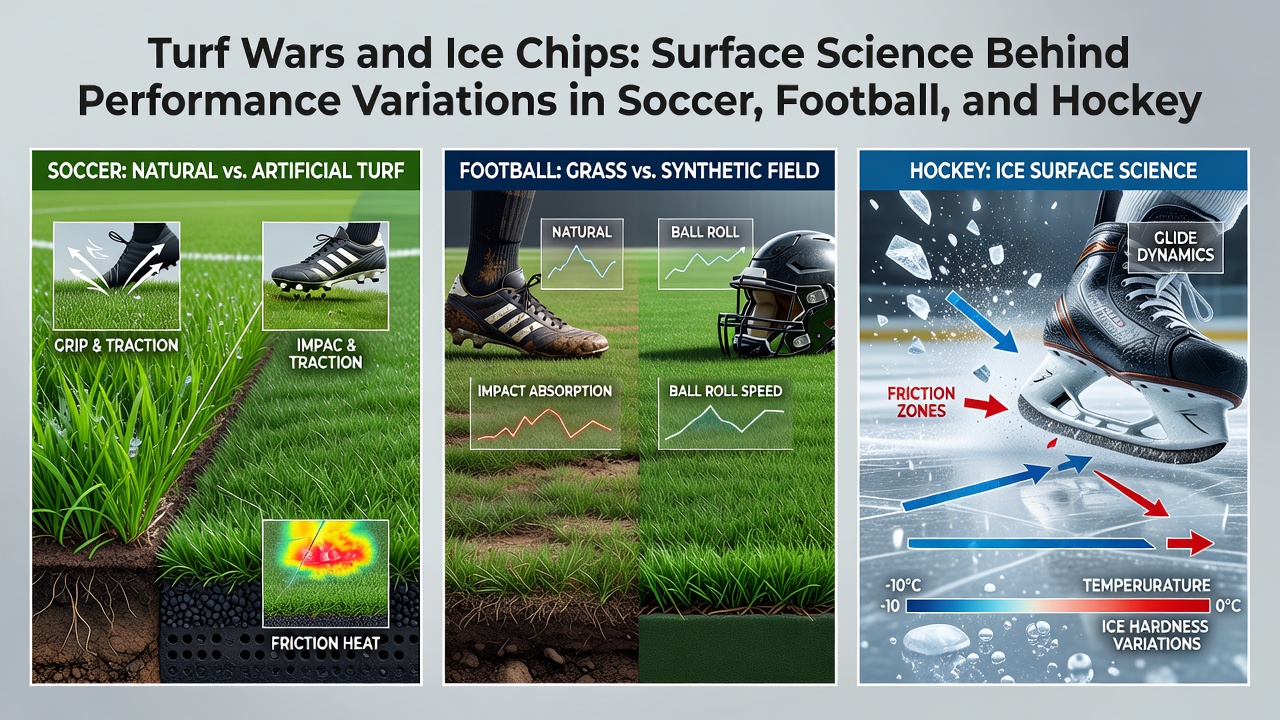
Surface conditions shape outcomes across soccer, American football, and hockey in measurable ways. Researchers track how grass density, turf fiber composition, and ice temperature alter player speed, ball trajectory, and injury rates. Data from multiple leagues show consistent patterns tied to these variables rather than random chance. In soccer, FIFA publishes pitch testing protocols that measure ball roll, bounce, and surface hardness. Natural grass pitches with higher root density reduce ball speed by up to 15 percent compared with hybrid surfaces that combine grass and synthetic fibers. Artificial turf installations meeting FIFA Quality Pro standards produce faster play overall, yet they increase rotational traction forces on cleats during cutting movements. UEFA technical reports note that teams playing on hybrid surfaces in European competitions record higher sprint distances per match, while those on older artificial pitches experience elevated muscle strain indicators during recovery monitoring. American football surfaces present a different set of variables. Natural grass fields in the NFL undergo frequent aeration and sand topdressing to maintain firmness. Studies conducted by the league's injury surveillance system reveal that games on natural grass correlate with lower rates of lower-extremity injuries compared with certain artificial turf systems installed before 2015. Newer turf generations incorporate longer polyethylene fibers and infill materials that aim to replicate natural shock absorption, yet temperature fluctuations still affect these fields differently. In warmer climates, surface temperatures on artificial turf can exceed ambient air by 20 degrees Fahrenheit or more, which alters muscle warm-up requirements for players entering the field. Hockey ice sheets depend on precise temperature control and water quality. NHL facilities maintain ice at minus 4 to minus 6 degrees Celsius during games, with Zamboni resurfacing intervals timed to preserve a thin water film that reduces friction. Research from the University of Calgary demonstrates that slightly warmer ice increases puck speed while decreasing edge grip for skates, which changes passing accuracy and checking effectiveness. International competitions overseen by the IIHF apply similar standards, although outdoor events introduce additional variables such as humidity and wind that affect ice hardness within minutes. Performance metrics collected across these sports illustrate the interactions. Soccer players on artificial turf cover greater total distances yet register fewer explosive accelerations in the final 15 minutes of matches. Football linemen exhibit higher ground reaction forces on certain turf systems, which correlates with measured increases in joint loading during blocking schemes. Hockey forwards on freshly resurfaced ice complete more zone entries per shift because reduced friction allows quicker directional changes. Maintenance practices further differentiate outcomes. Grounds crews in Major League Soccer apply specific watering schedules to control surface moisture and ball behavior. NFL teams monitor cleat length choices based on daily field hardness readings taken with penetrometers. Arena operators in the NHL adjust brine temperatures beneath the ice slab to compensate for crowd heat and lighting loads during evening games. June 2026 preparations for the FIFA World Cup across North American venues have accelerated testing of hybrid pitch systems in multiple stadiums. Technical assessments focus on how these surfaces respond to repeated high-intensity use during the tournament schedule. Similar evaluations continue in NHL arenas where ice technicians refine chilling systems ahead of the playoffs. One study from the Australian Institute of Sport examined elite athletes across field sports and found that surface consistency training programs improved adaptation times when players moved between venues. Another analysis conducted through Canadian university partnerships tracked puck velocity changes tied to ice age during regulation periods. FIFA technical reports detail standardized measurement tools now used by confederations worldwide. Data collected through these protocols help federations compare pitch performance across continents and climates.  Equipment manufacturers have responded with surface-specific products. Soccer cleat designs now include sole plates optimized for both natural and artificial grass. Football cleats feature interchangeable studs rated for different turf hardness levels. Hockey skate blades receive specific hollow grinds based on typical ice temperatures at each arena. Longitudinal data sets from professional leagues continue to expand understanding of how surface variables interact with player biomechanics. These records show measurable differences in acceleration profiles, change-of-direction times, and recovery intervals that align with documented surface properties rather than player preference alone.