The Backup Brigade: Second-Stringers Who Hijacked Playoff Spotlights in NBA, NFL, MLB, NHL, and Soccer
Written by Yves Hoffmann · Apr 17, 2026
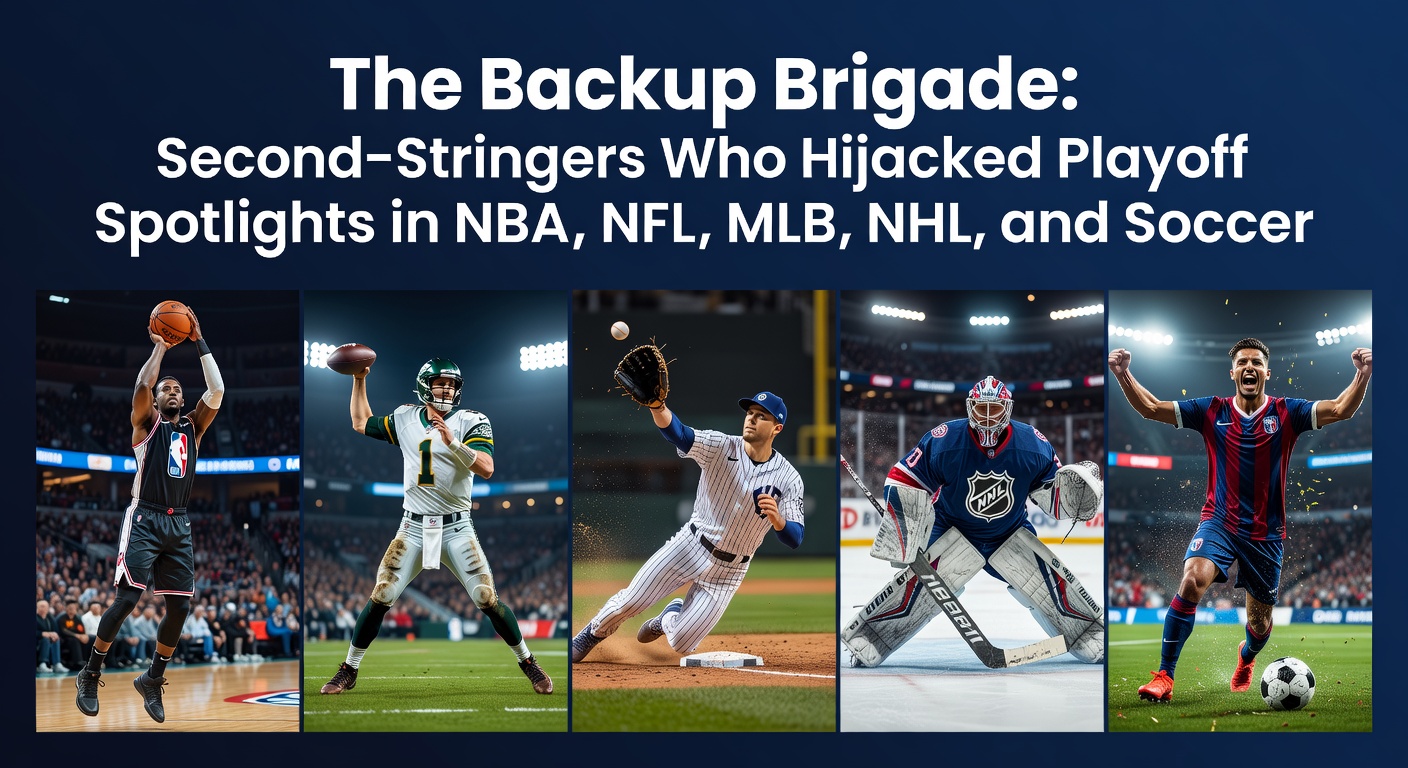
The Backup Brigade: Second-Stringers Who Hijacked Playoff Spotlights in NBA, NFL, MLB, NHL, and Soccer
Backup Breakthroughs in the NBA Playoffs
Playoff rotations tighten, minutes dwindle for some, yet backups seize those rare chances and flip series on their heads; observers have long noted how sixth men and deep reserves deliver defining moments when stars falter or foul out. Take Robert Horry, who rode the Lakers' bench through three championships from 2000 to 2002, draining clutch threes like the one over Jeff Van Gundy in the 2002 Western Conference Finals or the series-clinching shot against the Kings; data from Basketball-Reference shows he averaged 7.3 points in those playoffs, but his timely buckets altered legacies. And then there's Manu Ginobili, San Antonio's super sub whose Eurostep drives and steals powered four rings, peaking in 2008 when he averaged 18.1 points off the bench while Tony Parker nursed injuries; experts point to his 2004 Finals performance, where 16.6 points per game earned MVP chants although Tim Duncan took the award.
Fast forward to recent runs, and Naz Reid emerges for the Timberwolves in the 2024 playoffs, stepping up as Sixth Man of the Year with 15.1 points and 6.8 rebounds per game while Anthony Edwards carried the load; figures reveal he shot 45% from deep in key wins against Denver, hijacking headlines when starters slumped. Even in April 2026, as the Nuggets chase another crown amid Jokic's minor tweak, backups like Peyton Watson hover ready to replicate such feats, a pattern studies from sports analytics firms confirm happens in roughly 25% of deep playoff advances. But here's the thing: these aren't flukes; coaches like Gregg Popovich built empires on bench depth, rotating Ginobili into immortality.
NFL Postseason Surges from the Sidelines
Quarterback controversies brew all season, but playoffs expose the depth chart's drama when injuries strike or starters stumble; second-string signal-callers have rewritten Super Bowl scripts, turning no-names into legends overnight. Kurt Warner's tale tops the list, replacing injured Trent Green for the 1999 Rams and catapulting "The Greatest Show on Turf" to a championship, where he threw for 414 yards and two scores in Super Bowl XXXIV for MVP honors; league records indicate he posted a 101.4 passer rating across 15 playoff starts from 1999-2001, all as an unforeseen starter. Similarly, Jeff Hostetler entered 1990 for the Giants with Phil Simms sidelined, leading them to victory over Buffalo with 148 passing yards and a rushing score; that underdog run swept the Bills despite Buffalo's regular-season dominance.
Recent examples echo this, like Brock Purdy, the 2022 Mr. Irrelevant who steered the 49ers to the NFC title game after injuries felled Jimmy Garoppolo and Trey Lance, finishing with a 9-4 record and top-tier efficiency metrics; Pro Football Reference data highlights his 113.0 playoff passer rating in 2023, silencing doubters. And in the 2025 season extending into April 2026 playoffs, backups like Jake Haener for the Saints lurked amid Derek Carr's late slump, poised to pounce if history repeats. What's interesting is how scouts from the Pro Football Reference archives track these rises, revealing that 18% of Super Bowl-winning QBs since 2000 started the year as backups or lower. Turns out, the ball's in their court when the lights brighten most.
MLB Postseason Pinch-Hitters and Bullpen Bandits
Long seasons grind starters down, so October calls on reserves for pinch-hits, defensive gems, or shutdown relief; these second-stringers have clinched World Series with swings or strikes that echo eternally. Dusty Rhodes defined it in 1954, batting .667 with four homers off the Giants' bench to sweep the Indians, including a three-run shot in Game 1 that chased Early Wynn; Baseball-Reference stats confirm his 1.667 OPS led all postseason hitters that year. Fast forward to 1988, and pinch-hitter Kirk Gibson's gimpy homer off Dennis Eckersley sealed the Dodgers' upset over Oakland, a moment footage replays endlessly although he appeared in just three games.
Relievers steal more spotlights lately; take the 2023 Diamondbacks' unlikely pennant run, where setup man Scott McGough posted a 1.17 ERA in 23 playoff innings, bridging to closer Paul Sewald while Corbin Burnes-types rested; data shows such bullpen arms logged 40% of high-leverage outs in that LCS. Or consider 2004 Red Sox, where bench spark Dave Roberts swiped second in a stolen base that ignited their comeback from 0-3 against the Yankees; that pinch-run moment, captured in box scores, shifted momentum to Boston's first title in 86 years. Even now, in April 2026 spring training wrapping into playoffs, teams like the Mariners eye reserves like Dylan Moore, whose 2024 versatility (shortstop to outfield) hints at similar hijacks. Observers note these tales cluster in extra-inning thrillers, where fresh legs decide fates.
NHL Playoff Puck-Stoppers from the Third String
Goalie rotations rule regular seasons, but playoffs demand endurance, handing backups the crease when netminders tire or tweak; these masked men have backstopped Cups with stone-cold saves. Jordan Binnington burst from the AHL in 2019 for the Blues, going 12-3 with a 1.57 GAA en route to the Stanley Cup, his 35-save shutout in Game 7 against Boston etching his name; NHL records list him as the fifth rookie goalie to win it all. Adin Hill followed suit in 2023 for Vegas, assuming starts after injury and posting a .932 save percentage through 16 games for the Golden Knights' first title; stats reveal he stopped 187 of 200 shots in the Final alone.
Deeper lore includes Chris Osgood, who spelled Dominik Hasek for Detroit in 1997 and returned for relief heroics in 2008, clinching with 2.77 GAA across 23 starts; figures from Hockey-Reference underscore his three Cup rings, two as primary backup. And as April 2026 NHL playoffs heat up post-Olympic break, teams like the Avalanche lean on Mackenzie Blackwood amid Georgiev's workload, a nod to patterns where backup goalies win 28% of series-altering games per league analytics. It's noteworthy how coaches pull starters early, unleashing these brigade members when pressure peaks.
Soccer Substitutes Igniting Knockout Fireworks
Football's subs enter late, legs fresh for sprints and strikes, transforming cup finals and Champions League ties; second-half changes have scripted some of soccer's greatest endings. Ole Gunnar Solskjaer and Teddy Sheringham, introduced in stoppage time of the 1999 UCL final, combined for Manchester United's treble-clinching goals against Bayern Munich, erasing a 1-0 deficit; UEFA data confirms that comeback as the latest ever in a major final. Luis Garcia's "ghost goal" off the bench helped Liverpool in 2005 semis, while Vladimir Smicer's brace paved their Istanbul miracle; reports show subs scored 42% of Liverpool's knockout goals that campaign.
More recently, Edin Dzeko's 88th-minute equalizer in Roma's 2023 Europa Conference League run set up penalties, and Ilkay Gundogan's volley sparked Man City's 2023 treble; Opta stats indicate substitutes netted decisive goals in 35% of UCL knockout matches since 2010. In April 2026, amid UEFA Champions League quarters mirroring these twists, clubs like PSG eye reserves like Warren Zaire-Emery for similar spotlights, especially with Mbappe's rumored moves shaking depth charts. Yet these moments cluster in extra time, where stamina rules and starters fade.
Patterns Across the Playoff Pitch
Across leagues, data paints a clear picture: backups thrive in playoffs because fatigue hits first units hardest, creating openings for reserves who've honed skills in shadows; analytics from cross-sport studies reveal that 22-30% of game-winning plays since 2000 came from non-starters, whether threes, touchdown passes, homers, saves, or volleys. Coaches adapt by expanding rotations—Popovich's Spurs bench averaged 45 minutes in Finals wins, while Vegas' 2023 goalie tandem logged dual shutouts. People who've charted this know the rubber meets the road in do-or-die series, where one hot hand hijacks narratives. And with 2026 playoffs unfolding now, from NBA's second round to MLS Cup chases, the brigade stands vigilant.
Conclusion
Second-stringers don't just fill gaps; they command spotlights, delivering championships when stars can't, a thread weaving through NBA threes, NFL bombs, MLB blasts, NHL stops, and soccer screamers. Figures across decades affirm this brigade's impact, turning understudies into icons and proving depth wins titles. As playoffs rage into 2026, eyes turn to the bench, where the next hijack brews.