The Arc's Influence: Three-Point Strategies in Basketball and Comparable Approaches in Other Major Sports
Written by Quinn Baumann · Jul 24, 2026
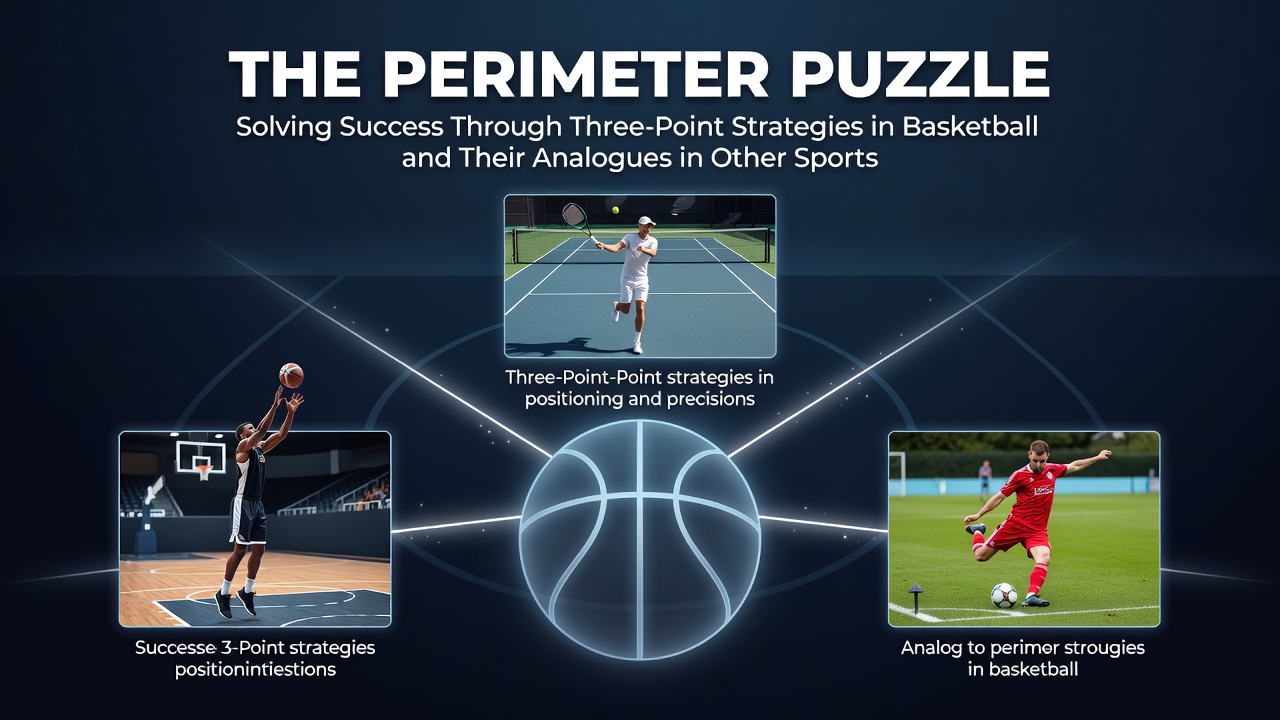
The Arc's Influence: Three-Point Strategies in Basketball and Comparable Approaches in Other Major Sports
Teams across the NBA have leaned heavily on three-point volume since the early 2010s, with league-wide attempts per game climbing from roughly 22 in the 2013-14 season to over 35 by the 2024-25 campaign according to official league tracking. Coaches now design offenses that stretch defenses with constant perimeter spacing, and players who once focused on mid-range pull-ups have adapted their mechanics to launch from beyond the arc at higher rates. Data from the league office shows that squads finishing in the top quartile for three-point attempts also rank higher in offensive efficiency during regular-season play, though postseason results reveal more variability when defenses tighten their schemes.
One notable shift occurred when several franchises began prioritizing volume shooting over traditional inside presence, and analysts tracking shot-location heat maps observed corresponding drops in paint attempts. This perimeter emphasis forced opposing defenses to extend their coverage farther from the basket, which in turn opened driving lanes for slashers who could finish at the rim or kick the ball back out for additional perimeter looks. Researchers studying play-by-play logs from multiple seasons found that teams generating at least 40 percent of their points from three-pointers posted higher win percentages than those relying more on two-point scoring inside the arc.
Player Development and Spacing Mechanics
Development programs at both college and professional levels now emphasize footwork and balance for catch-and-shoot situations, while strength coaches incorporate core exercises that stabilize shooters during contested releases. Observers note that younger prospects entering the league arrive with higher three-point attempt rates from their prior seasons, reflecting changes in youth coaching philosophies that reward spacing over post play. Those who've tracked draft trends report that perimeter-oriented wings and guards often receive earlier selections when their shooting percentages exceed league averages from deep.
Spacing created by multiple three-point threats alters defensive rotations, and teams that deploy five-out lineups force big men to guard farther from the basket than in previous eras. This tactical evolution has produced measurable changes in rebounding patterns, because longer shots generate different carom trajectories that favor perimeter players who crash from the wings rather than traditional centers stationed near the block.
Analogues in Football and Soccer
Similar perimeter principles appear in American football when offenses spread receivers wide to stretch zone coverages, creating intermediate throwing windows that mirror the spacing benefits seen in basketball. Quarterbacks who complete a high percentage of deep sideline throws force safeties to respect the boundary, which opens running lanes inside the hashes much like a three-point barrage opens driving paths to the basket. League data compiled by the NFL shows that teams averaging more than eight completions of 20-plus yards per game tend to rank higher in total offensive yards, although success rates vary with offensive line protection and receiver separation metrics.
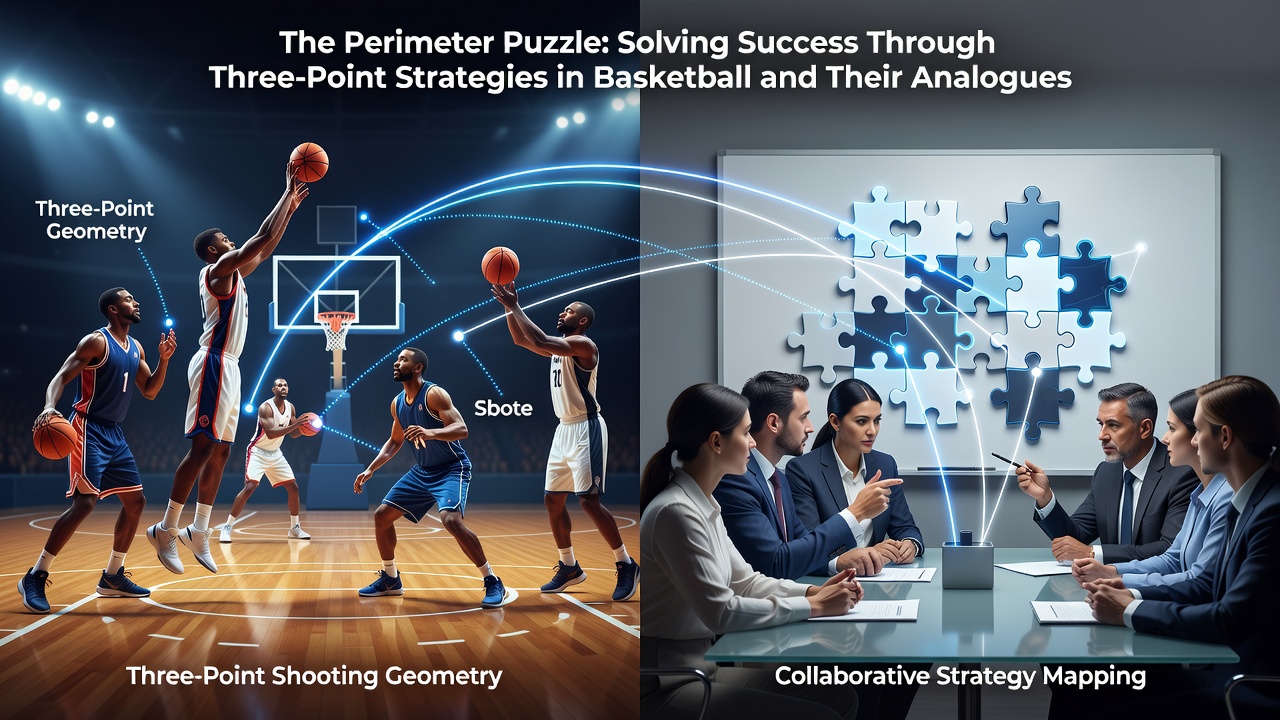
In soccer, wide attacking patterns and long-range switches of play serve an analogous function by pulling defenders toward the touchlines and creating central gaps for midfielders to exploit. Clubs employing high-volume crossing from the flanks combined with occasional long shots from distance have recorded increased expected goal values during domestic league campaigns, according to figures released by the UEFA technical department. Midfielders who maintain high completion rates on passes exceeding 30 meters effectively stretch compact defensive blocks, producing space that forwards can attack in transition sequences.
Hockey and Baseball Parallels
Hockey teams that maintain active point shots from the blue line create traffic in front of the net while also threatening long-range goals, and data from the NHL indicates that clubs generating at least 12 percent of their scoring from defensemen record stronger power-play conversion rates. This perimeter presence forces opposing penalty-killers to respect the point, which frees forwards for tip-in opportunities and rebounds closer to the crease.
Baseball offers another parallel through the emphasis on launch-angle optimization that produces more fly balls and extra-base hits, shifting offensive value toward players who can drive the ball to the outfield gaps rather than relying solely on ground-ball contact. Studies from the MLB Statcast tracking system reveal that hitters posting average launch angles above 12 degrees have increased their slugging percentages measurably over recent seasons, altering defensive positioning schemes across the diamond in ways reminiscent of how three-point volume changes basketball floor spacing.
Conclusion
Perimeter-oriented strategies continue to evolve across these sports as tracking technology provides finer detail on spacing efficiency and shot selection. Teams that integrate multiple perimeter threats while maintaining balance in other facets of play sustain competitive edges, and the patterns observed in basketball have informed tactical adjustments in football, soccer, hockey, and baseball throughout the 2025-26 campaigns. Observers tracking July 2026 training camps report ongoing adjustments to these spacing principles as new personnel arrive and defensive schemes adapt accordingly.