Tempo Shifts Reshaping Efficiency Rankings in Basketball, Baseball, and Football
Written by Mia Hughes · Aug 29, 2026
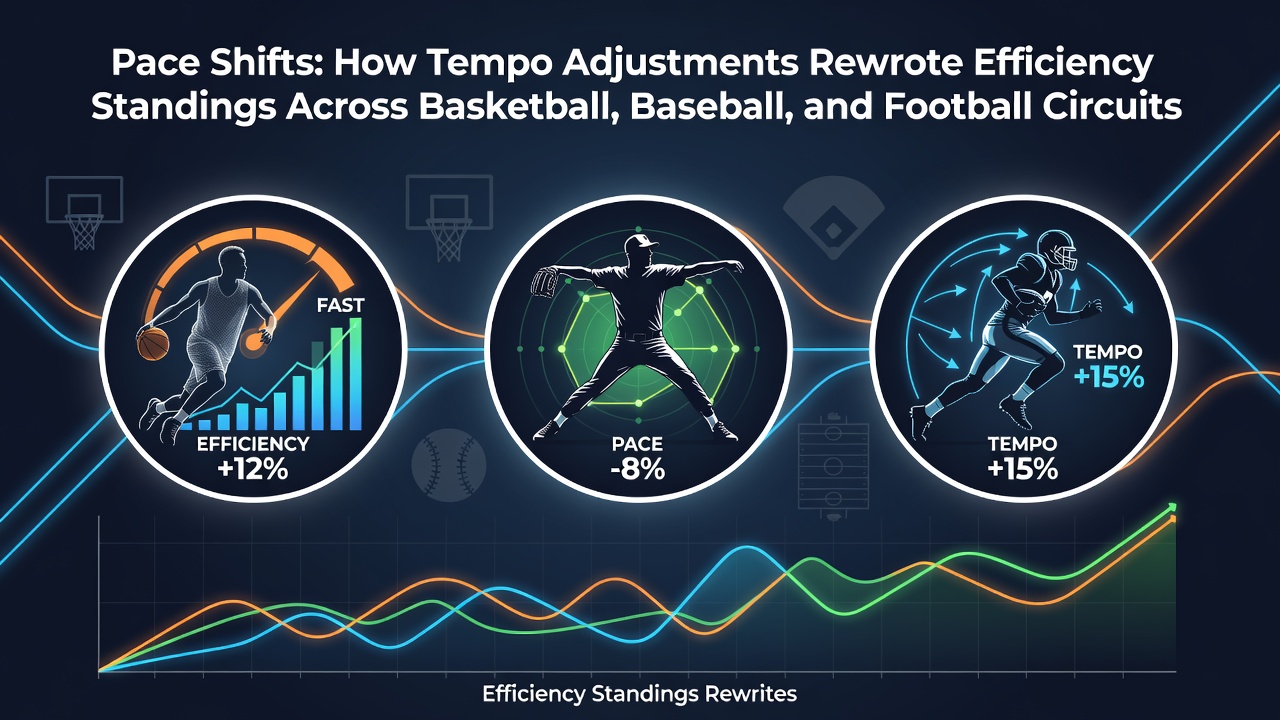
Tempo Shifts Reshaping Efficiency Rankings in Basketball, Baseball, and Football
Understanding Pace Adjustments Across Leagues
Coaches and analysts have tracked how deliberate changes in game tempo influence efficiency metrics, and data from recent seasons shows these adjustments often reorder team standings in unexpected ways. In basketball, baseball, and football, teams that modified their operating speed recorded measurable shifts in points per possession, runs per inning, and yards per play, according to league tracking systems updated through the 2025-2026 campaigns.
Researchers at university sports science programs have documented that higher or lower tempos alter fatigue patterns and defensive recovery times, which in turn affects overall productivity numbers. Teams that accelerated their pace in basketball, for instance, generated more transition opportunities while those that slowed play emphasized half-court execution and higher shooting percentages.
Basketball: Faster Transitions and Efficiency Gains
NBA and college programs that adopted quicker offensive transitions recorded higher effective field goal percentages during the 2025-2026 season, as tracked by official league analytics platforms. One study from a Canadian research institute found that squads increasing possessions per game by at least eight percent improved their offensive efficiency ratings by roughly four points per 100 possessions compared with prior years. Defenses, meanwhile, faced challenges maintaining positioning when opponents pushed the tempo, leading some franchises to adjust substitution patterns mid-season.
Observers note that these pace modifications contributed to several teams climbing the efficiency charts, particularly those emphasizing three-point volume combined with rapid ball movement. Data collected through August 2026 indicates continued experimentation with pace as clubs prepare for upcoming campaigns.
Baseball: Pitch Clocks and Inning Efficiency
Major League Baseball introduced pitch-clock regulations several years ago, and subsequent data reveals impacts on game duration along with offensive output per inning. Teams that adapted quickly to shorter intervals between pitches maintained or improved their runs-scored averages, while slower-adjusting clubs experienced temporary dips in on-base percentages during early season stretches. A report from an Australian sports research center highlighted how reduced downtime between pitches influenced pitcher recovery and batter preparation routines across multiple divisions.
Baseball analysts tracking 2026 spring training and regular season figures observed that clubs emphasizing quicker defensive shifts after each pitch posted lower earned run averages in late innings. These adjustments altered traditional efficiency standings, placing renewed emphasis on athleticism and preparation speed rather than solely on raw pitching velocity.
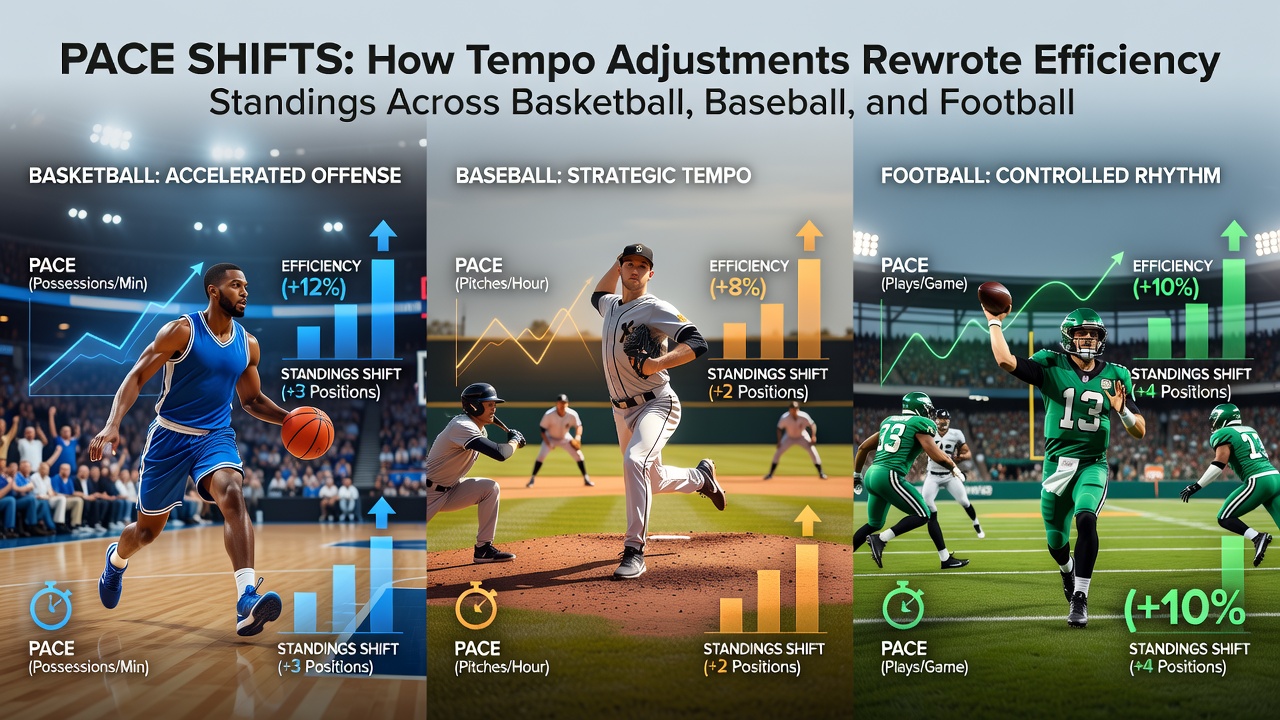
Football: Hurry-Up Offenses and Yardage Efficiency
National Football League and collegiate programs have increasingly deployed no-huddle or hurry-up schemes, and league statistics through the 2025 season demonstrate corresponding changes in yards per play and time of possession metrics. Teams that sustained higher snap counts per game frequently posted elevated offensive efficiency ratings, especially when paired with personnel packages designed for rapid substitutions. Research published by a European sports performance laboratory indicated that these tempo increases also affected defensive fatigue levels, prompting coordinators to rotate linemen more frequently.
Figures released in August 2026 show several franchises that refined their pace management during the prior offseason achieved top-ten rankings in total yards and scoring efficiency. The adjustments proved particularly effective on third-down situations, where quicker play-calling reduced defensive alignment time and increased conversion rates for offenses that mastered the approach.
Cross-Sport Patterns and Data Trends
Comparative reviews from industry research groups reveal common threads across the three sports: controlled tempo changes often produce measurable efficiency lifts when supported by targeted training and recovery protocols. Organizations that integrated biometric monitoring with pace strategies reported fewer late-game drop-offs in performance metrics. Data indicates that successful implementations rely on precise timing rather than blanket acceleration or deceleration.
Those who've examined league standings note that mid-season adjustments to operating speed frequently correlate with improved playoff positioning, especially when teams balance pace with skill-set compatibility. External sources such as NCAA research reports and performance studies from the Australian Institute of Sport provide additional context on how tempo variables interact with efficiency outcomes across different competitive environments.
Conclusion
League data through August 2026 confirms that tempo adjustments continue to influence efficiency standings in basketball, baseball, and football. Teams that refine their pace strategies while accounting for player conditioning and opponent responses maintain advantages in key statistical categories. Ongoing tracking by research institutions and league offices will likely reveal further refinements as the 2026-2027 seasons progress.