Surface Tactics: How Venue Materials and Microclimates Reshape Strategies Across Professional Leagues
Written by Mia Hughes · Jul 31, 2026
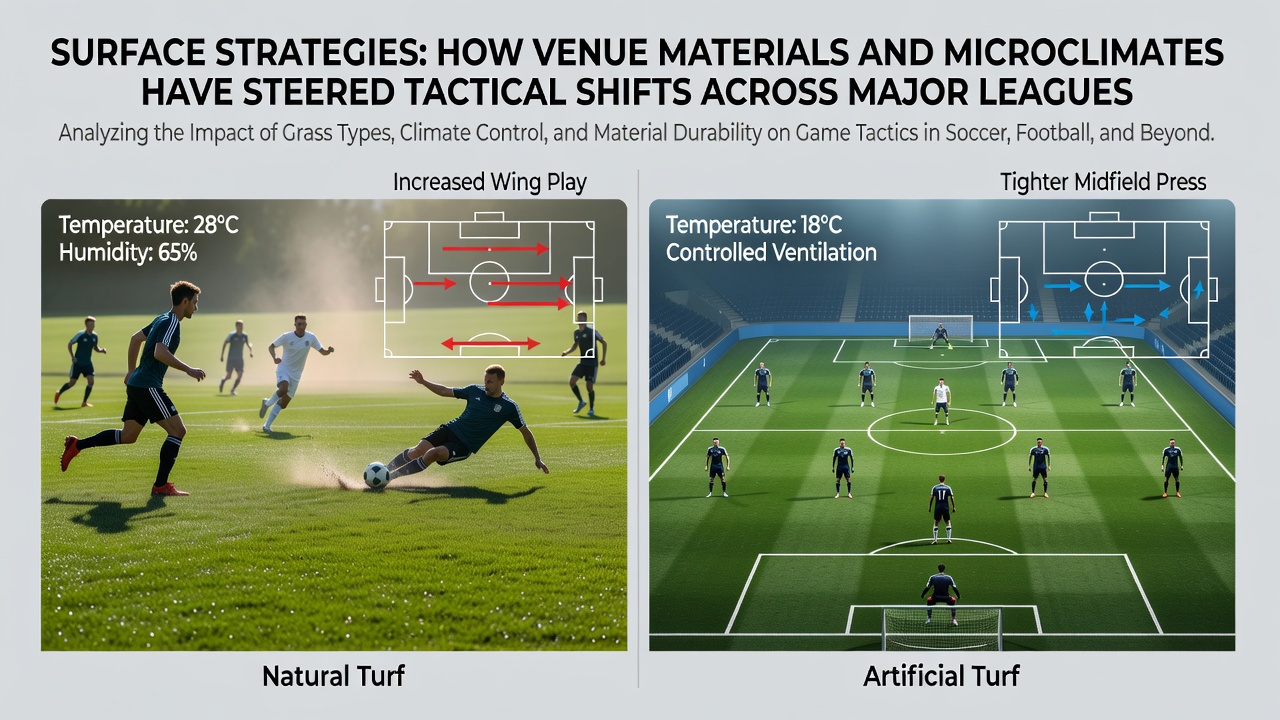
Surface Tactics: How Venue Materials and Microclimates Reshape Strategies Across Professional Leagues
Venue surfaces and localized climate conditions have long influenced how teams prepare and adjust their approaches in leagues ranging from Major League Baseball to the English Premier League, the NBA, the NHL, and the NFL. Materials used in playing fields, from natural grass hybrids to synthetic turf systems, combine with factors like altitude, humidity levels, and indoor air circulation to create distinct performance environments that dictate player positioning, pace of play, and substitution patterns.
Research from the Australian Institute of Sport shows that hybrid grass pitches, now standard in many European and Australian venues, maintain higher ball speeds during wet conditions compared with traditional natural turf, prompting managers to emphasize quick short passes rather than long aerial routes in matches played after heavy rainfall. Data collected across multiple seasons indicates that teams adapt by increasing pressing triggers in midfield zones where the surface allows faster transitions.
Field Composition and Its Direct Effects on Movement Patterns
Baseball diamonds present another clear case where infield dirt composition and outfield grass length steer defensive alignments. In July 2026, several MLB clubs adjusted their shift restrictions compliance by repositioning infielders closer to the lines on venues with firmer, lower-cut grass, because ground-ball trajectories traveled farther before slowing. Observers note that stadiums at higher elevations, such as those in Denver, produce thinner air that extends fly-ball distances by measurable margins, leading managers to stack lineups with power hitters who capitalize on the reduced drag.
NBA hardwood courts, although standardized in dimension, vary in finish coatings and underlying cushioning that affect bounce and player fatigue. Studies conducted by researchers at the University of Waterloo in Canada reveal that certain arena floors absorb slightly more impact energy, which correlates with reduced vertical leap heights late in games and prompts coaches to rotate big men earlier when facing opponents on those surfaces.
Microclimate Variables in Enclosed and Open Venues
Indoor arenas introduce controlled microclimates that teams monitor closely. Humidity levels maintained between 45 and 55 percent in many NHL rinks influence ice hardness, while ventilation patterns create colder zones near the boards. Those who've analyzed game footage across multiple seasons find that defensive pairings often adjust gap control distances based on how quickly the puck slides in drier, colder sections of the ice.
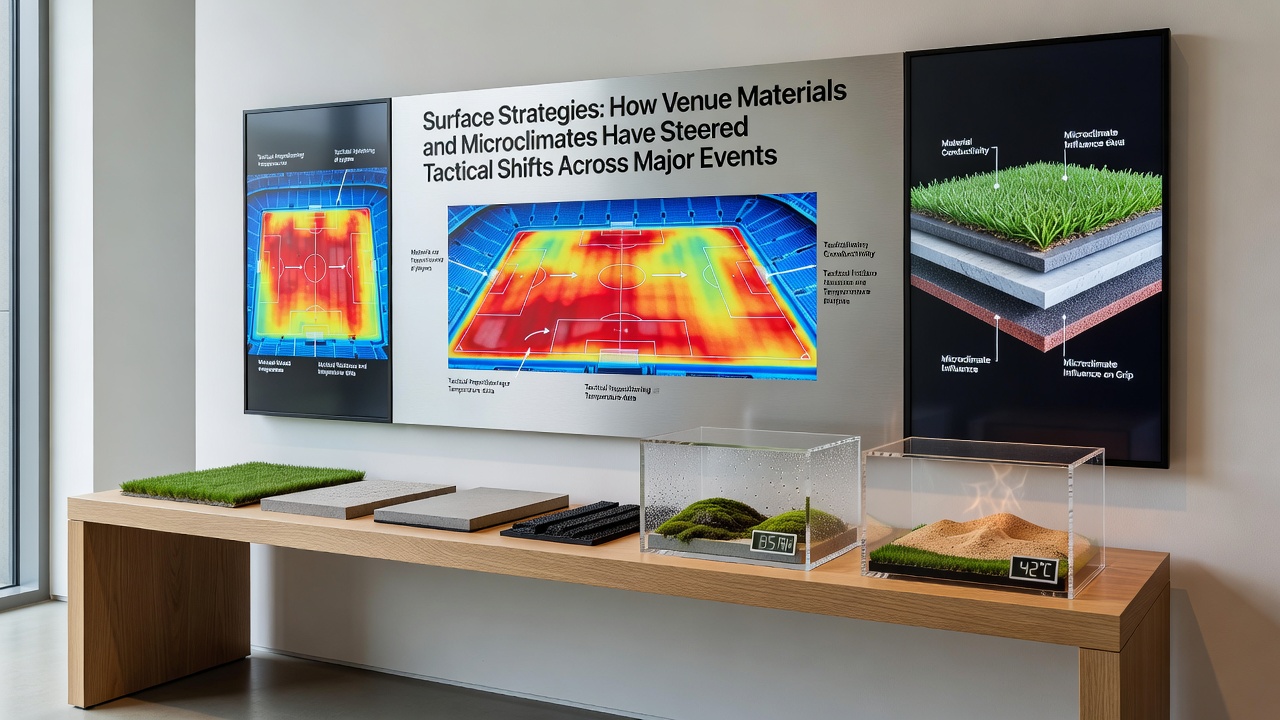
Outdoor soccer stadiums add wind corridors and temperature gradients that vary by time of day. According to technical reports published by FIFA, venues with open ends allow crosswinds that alter long-ball accuracy, so coaches instruct fullbacks to keep passes shorter and more grounded during afternoon fixtures when thermal updrafts are strongest. Temperature spikes above 28 degrees Celsius have been linked to higher substitution rates after the 60-minute mark, as data from match tracking systems shows reduced high-intensity running distances.
League-Wide Adjustments and Equipment Interactions
NFL teams face similar considerations on natural grass versus artificial turf fields. Turf surfaces retain heat and produce higher surface temperatures, which studies from the National Football League Players Association associate with changes in cleat selection and route-running depth. Quarterbacks in dome stadiums, where air conditioning creates consistent humidity, often call more play-action passes because teh ball maintains its spiral integrity better than in open-air environments subject to sudden gusts.
Across these sports, training regimens now incorporate venue-specific simulations. Clubs schedule practice sessions on replica surfaces weeks before road games, while analysts review historical performance metrics tied to each stadium's elevation and prevailing wind directions. The cumulative effect appears in evolving rule interpretations as well, such as MLB's 2023 shift restrictions that interacted with ground-ball tendencies on different infield materials.
Conclusion
Venue materials and microclimates continue to serve as measurable variables that teams integrate into preparation cycles and in-game decisions. Data collected from multiple leagues demonstrates consistent correlations between surface properties, localized climate factors, and tactical choices ranging from substitution timing to formation adjustments. As monitoring technology advances, organizations maintain detailed profiles for every facility, allowing staff to refine strategies based on documented patterns rather than assumptions.