Stadium Swings: Attendance Responses to Team Momentum in Major Professional Leagues
Written by Yves Hoffmann · Jul 26, 2026
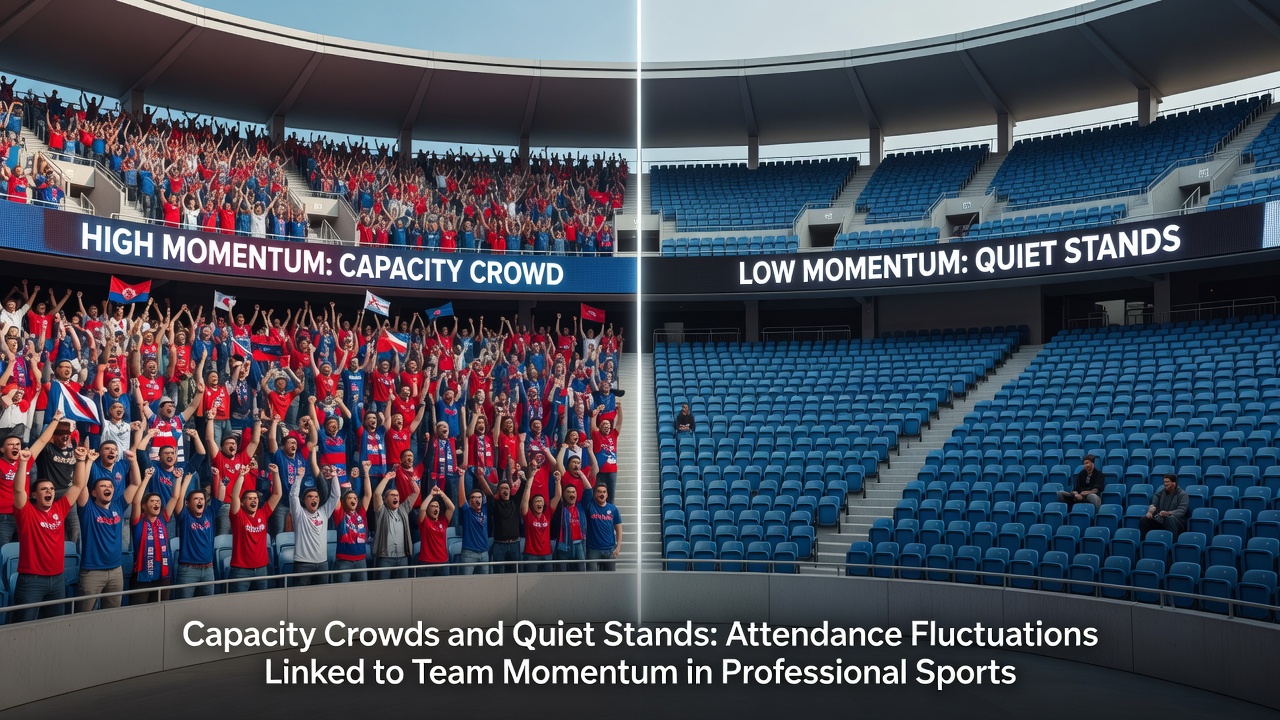
Stadium Swings: Attendance Responses to Team Momentum in Major Professional Leagues
Professional sports leagues track attendance figures that rise and fall alongside team performance streaks, with data from multiple seasons showing consistent patterns across the NFL, NBA, MLB, NHL, and major soccer competitions. Researchers at institutions such as the University of Toronto have documented how winning runs correlate with increased ticket sales, while losing stretches produce measurable drops in gate receipts. League offices compile weekly reports that break down these shifts by market size, weather conditions, and opponent strength, yet momentum remains one of the clearest variables.
Patterns Across North American Leagues
The NBA provides one of the clearest illustrations because its 82-game schedule creates frequent opportunities to observe momentum changes. Teams on five-game winning streaks average higher walk-up sales than those mired in longer slumps, according to figures released by the league's central office. Similar trends appear in the NHL, where Canadian franchises report sharper attendance spikes after extended point streaks compared with clubs outside playoff contention by mid-January. MLB data collected through the 2025 season and into the first half of 2026 shows that clubs gaining ground in their division during June and July often see renewed interest at the gate, particularly in markets with strong local media coverage.
Soccer Attendance Trends in Europe and Beyond
European soccer leagues display comparable dynamics even though most matches occur on weekends. The Premier League and Bundesliga publish attendance statistics that link consecutive victories to incremental increases in season-ticket renewals and single-match purchases. In Spain's La Liga, clubs that climb out of mid-table positions during spring months frequently record stronger crowds for remaining home fixtures. Australian A-League reports released by the national sports authority indicate parallel movements, with momentum shifts after international breaks producing noticeable differences in stadium occupancy.
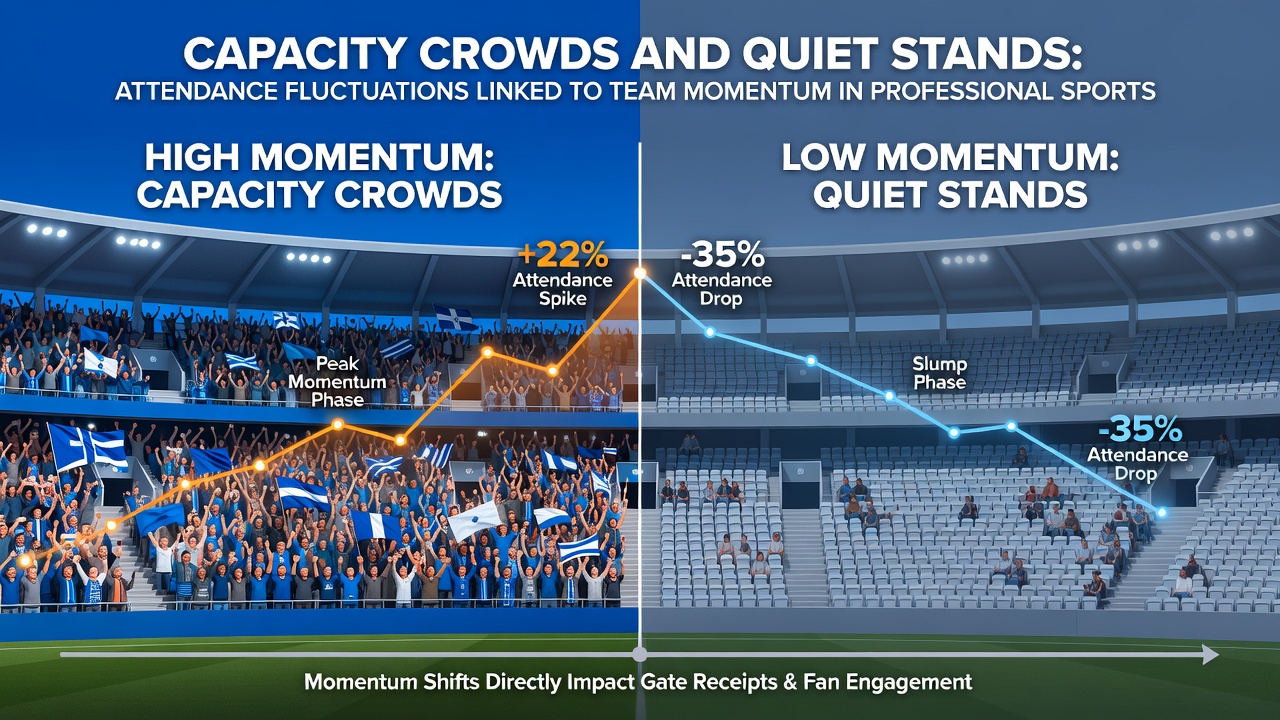
Observers note that these patterns hold across both large and smaller markets, although the magnitude varies. Teams with established fan bases experience smaller percentage changes, whereas clubs rebuilding after poor prior seasons show more dramatic swings when results improve. Television blackout rules in certain regions further amplify the effect, because fans who cannot watch at home sometimes choose to attend when the team wins.
Contributing Factors Beyond Wins and Losses
Weather, scheduling, and promotional events interact with momentum but do not erase the underlying relationship. Data compiled by the Canadian Heritage Sport Canada program shows that even after controlling for temperature and day of week, teams with positive recent form draw larger crowds. Rivalries and playoff races add another layer; a club entering July 2026 with a realistic chance at postseason qualification often sustains higher attendance than its record alone would predict. Conversely, mathematically eliminated teams experience accelerated declines regardless of individual player performances.
Measurement and Reporting Practices
League statisticians use paid attendance rather than turnstile counts to standardize comparisons, a method that accounts for no-shows and corporate suites. Academic papers published in sports management journals have tested these datasets against advanced metrics such as expected goal differentials in soccer or plus-minus ratings in hockey. The results consistently point to recent form as a stronger predictor of next-week attendance than longer-term averages. Front offices adjust marketing spend accordingly, shifting resources toward games following strong road trips or extended home stands that produce victories.
Conclusion
Attendance records across professional sports demonstrate that momentum influences how many spectators enter venues on any given date. League reports, university studies, and government sports agencies all supply evidence that winning streaks lift figures while losing sequences reduce them, even after other variables receive statistical control. These patterns appear in every major league and continue to shape operational decisions for teams and venues alike.