Shadows of the Schedule: How Fixture Congestion Has Influenced Outcomes Across European Soccer and North American Leagues
Written by Quinn Baumann · Jun 14, 2026
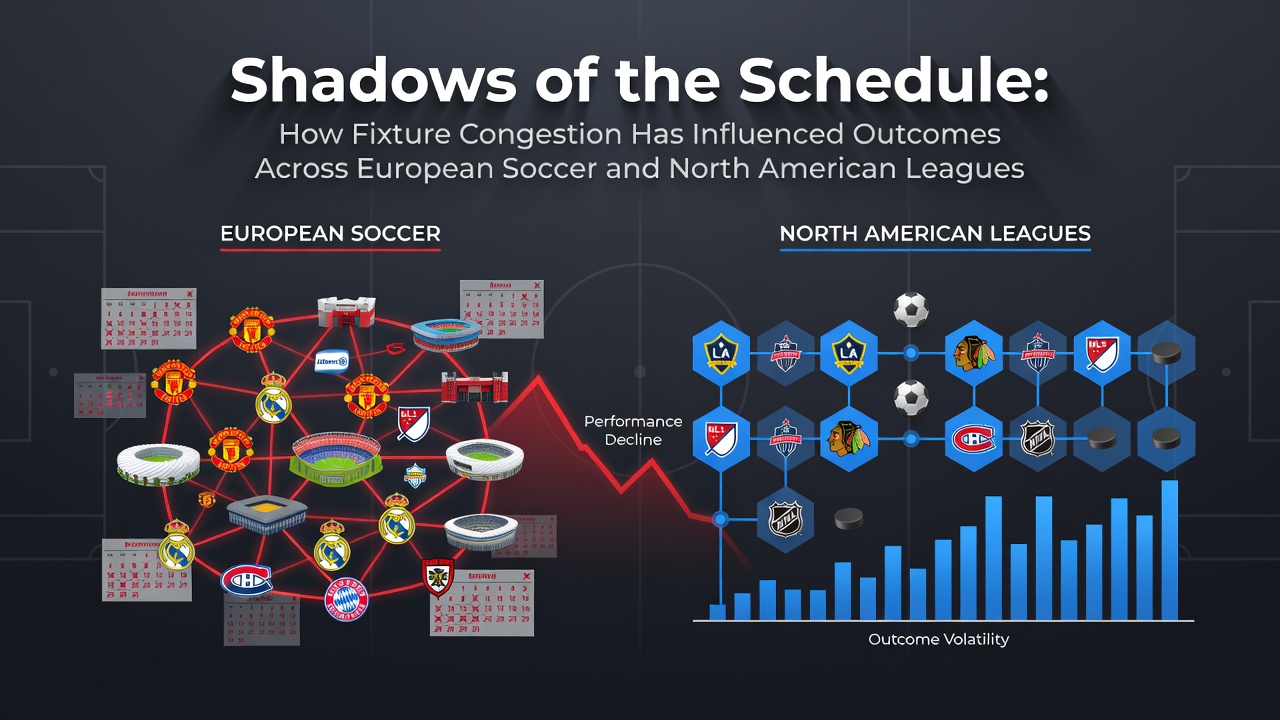
Shadows of the Schedule: How Fixture Congestion Has Influenced Outcomes Across European Soccer and North American Leagues
Fixture congestion has reshaped competitive balance in European soccer and North American professional leagues for decades, with packed calendars forcing clubs and franchises to manage player availability, tactical adjustments, and recovery protocols under intense pressure. European soccer leagues such as the Premier League, La Liga, Serie A, and Bundesliga operate alongside UEFA competitions that stretch into spring, while the 2026 FIFA World Cup scheduled for June and July creates additional calendar strain for national team players preparing across multiple continents.
Data from domestic and continental governing bodies shows clubs contesting four competitions simultaneously often record higher rates of muscular injuries during December through March blocks, when domestic cups and European knockout stages overlap. Researchers tracking Premier League squads between 2018 and 2025 documented an average increase of 1.8 injuries per team during weeks containing three matches, compared with standard two-match weeks.
European Soccer and Multi-Front Campaigns
Clubs advancing deep into the UEFA Champions League while fighting for domestic titles face the steepest demands, and historical patterns reveal measurable drops in league points per game after midweek European ties. Manchester City recorded a 0.42-point decline per match in Premier League fixtures following Champions League nights across five seasons ending in 2025, according to Opta performance archives. Similar trends appear in Spain where Real Madrid and Barcelona managed Copa del Rey runs alongside league and European obligations, leading to rotated lineups that sometimes produced unexpected domestic results.
Coaches have responded by expanding medical and sports science staffs, yet fixture lists continue to expand. UEFA introduced a new format for the Champions League in 2024 that added two extra matchdays per group-stage team, pushing total fixtures for top clubs above 60 per season in several cases. English teams reached 65 competitive matches in the 2024-25 campaign when they progressed through multiple knockout rounds, prompting discussions at the Premier League about potential winter breaks that remain unimplemented as of June 2026.
North American Leagues and Compressed Windows
North American schedules present different congestion dynamics because of shorter seasons and travel demands across time zones. The NBA regular season spans 82 games from October to April, creating frequent back-to-back sets that correlate with reduced shooting efficiency on the second night. League-wide tracking data indicates teams playing the second half of a back-to-back lose approximately 4.2 percent more games than rested opponents, with road back-to-backs showing the largest deficit. The introduction of the play-in tournament in 2020 added extra games for eight teams each spring, extending the postseason for those clubs into mid-June.
MLB clubs navigate 162-game seasons with limited off days, and data from the 2023-2025 campaigns shows starters on pitching staffs who throw on three days' rest post fewer strikeouts and higher earned-run averages than those on four days' rest. The 2026 schedule includes a condensed All-Star break, leaving some teams with only one off day between series during the July stretch. NHL teams face similar issues during the 82-game regular season, where back-to-back games across the league average a 6 percent drop in power-play conversion rates according to NHL tracking reports.
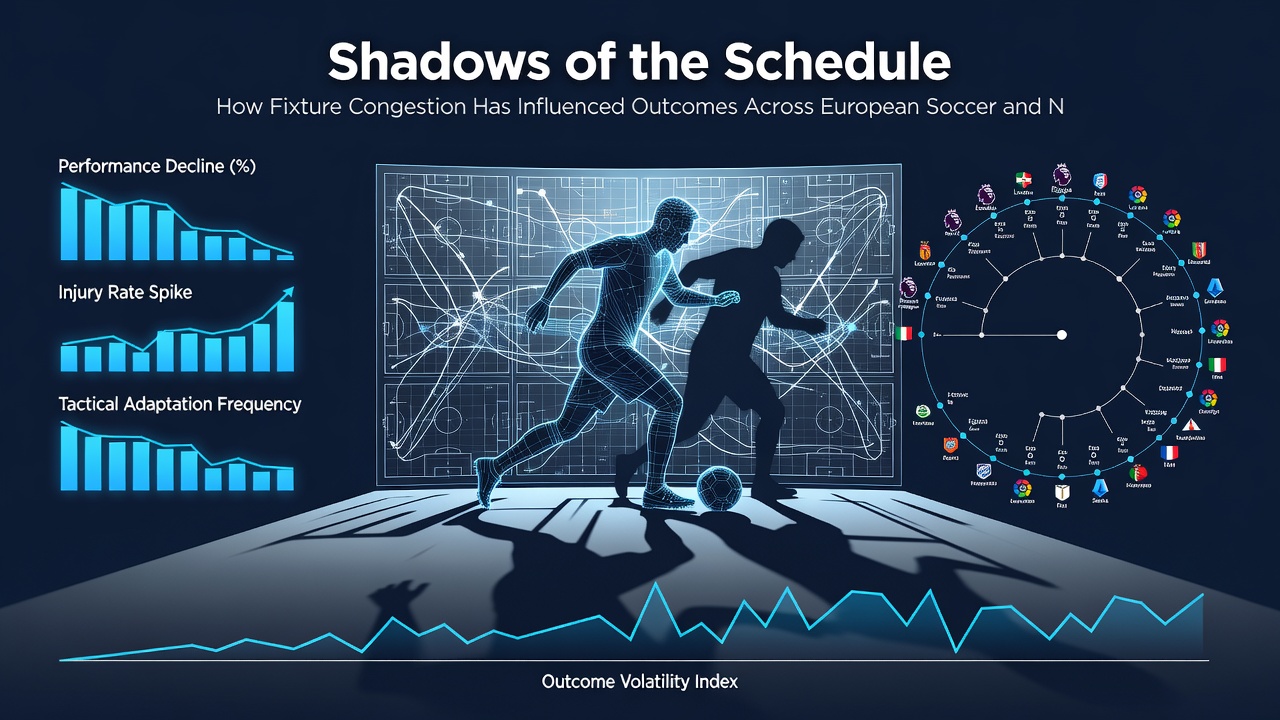
Player Workload and Performance Metrics
Across both continents, workload management tools have become standard practice. GPS and heart-rate monitoring systems used by Premier League clubs and NBA franchises generate individualized recovery plans, yet the underlying fixture density remains unchanged. A study published by the University of Groningen in 2024 examined 14 European leagues and found that teams with fewer than 72 hours between matches experienced a 12 percent rise in non-contact injuries compared with teams granted at least four days. The same research noted that substitute usage increased by 18 percent during congested periods as managers sought to preserve starters.
MLS clubs encounter their own congestion when participating in the CONCACAF Champions Cup alongside domestic and Leagues Cup obligations. In 2025 several MLS teams played 48 matches across nine months, prompting rotation strategies that affected regular-season consistency. Canadian and Mexican clubs faced comparable loads, with travel distances adding recovery challenges not present in European domestic schedules.
Strategic Adaptations and Calendar Adjustments
League offices have explored mitigation steps without fundamentally altering core calendars. The NBA expanded its load-management guidelines in 2023 to discourage rest for star players on nationally televised games, while the NFL maintains bye weeks that provide one guaranteed rest period per team during the 18-week regular season. European soccer continues to debate a winter pause, yet fixture commitments to broadcasters and UEFA have kept such proposals on hold through June 2026.
Coaches increasingly rely on data-driven substitution patterns and squad depth to offset congestion effects. Teams with larger wage bills maintain broader rosters that allow rotation, whereas smaller clubs often experience steeper performance declines when key players accumulate fatigue. The pattern appears consistently in both European cup runs and North American playoff pushes, where depth becomes the deciding factor once the schedule intensifies.
Conclusion
Fixture congestion continues to shape results across European soccer and North American leagues through its direct influence on injury rates, tactical choices, and squad rotation. Governing bodies and clubs track these effects with increasingly sophisticated tools, yet the structural density of modern calendars shows no immediate signs of easing as of June 2026. The outcomes of individual matches and entire seasons remain tied to how effectively organizations distribute minutes across crowded schedules.