Inside Salary Cap Systems: How They Foster Parity Among Professional Sports Franchises
Written by Quinn Baumann · Jun 21, 2026
Inside Salary Cap Systems: How They Foster Parity Among Professional Sports Franchises
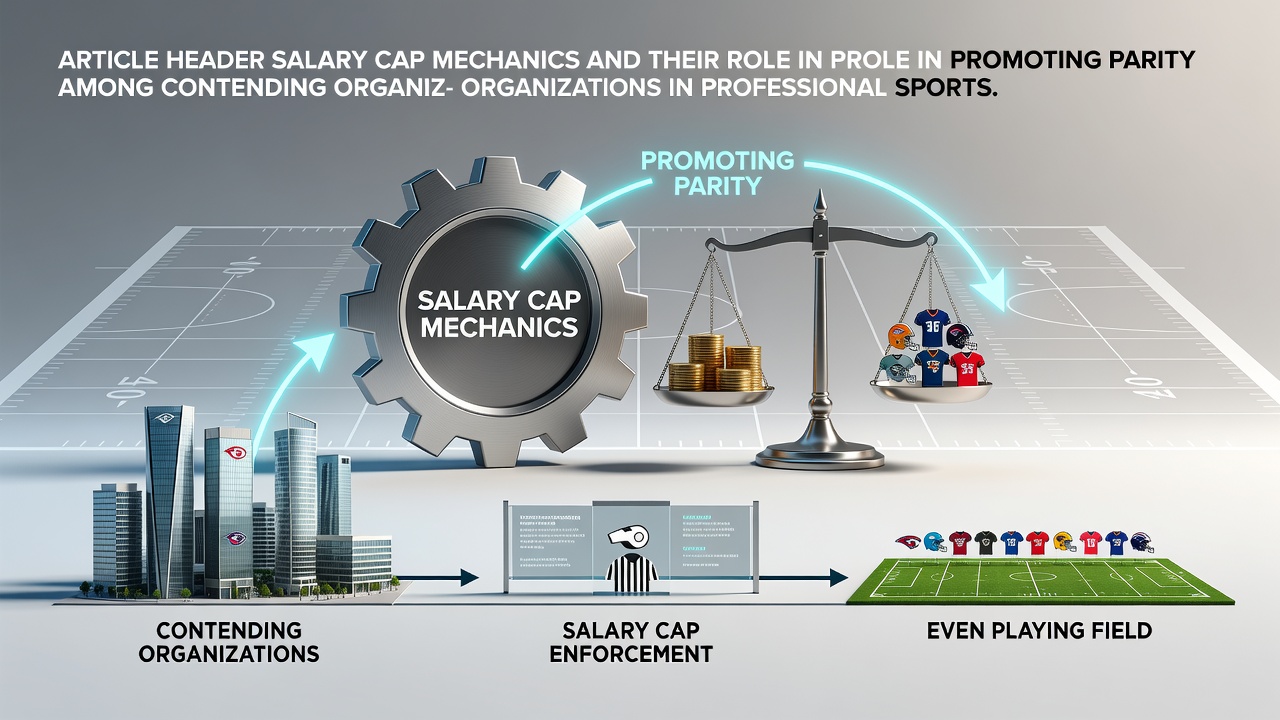
Salary cap mechanics operate as structured financial limits that teams must follow when signing players and managing payrolls, and these rules directly influence how contending organizations maintain competitive balance across entire leagues. Data from league records shows that hard caps, which set absolute spending ceilings without exceptions for most contracts, appear in the NFL where the 2025 limit reached 279.2 million dollars per team while soft caps in the NBA allow exceptions such as mid-level exceptions and bird rights that give some flexibility yet still tie overall payrolls to a defined threshold. Observers note that these systems prevent wealthier franchises from stockpiling talent indefinitely, which in turn distributes star players more evenly and keeps more teams in playoff contention year after year.Core Components That Define Cap Operations
League officials calculate salary caps each year using formulas tied to league-wide revenues, and this process incorporates broadcast deals, ticket sales, and merchandise figures to set the annual number. In the NHL a hard cap has remained in place since the 2005 lockout, with the 2025-26 ceiling listed at 88.2 million dollars, and teams face strict penalties including fines and lost draft picks when they exceed the limit. The NBA combines a salary cap with a luxury tax system that penalizes teams above certain thresholds, creating a financial incentive for restraint while still permitting higher-spending clubs to retain core players through designated exception rules.
League-Specific Applications and Adjustments
Each major league tailors its cap rules to fit its business model, and the NFL enforces the strictest version by counting nearly every contract dollar against the cap with few carryover provisions allowed. NBA rules permit teams to exceed the cap when re-signing their own free agents under the bird exception, yet the luxury tax escalates sharply for repeat offenders and redistributes those payments to lower-spending clubs. MLB relies on a luxury tax rather than a hard cap, with the 2025 threshold set at 241 million dollars, and teams that surpass it pay escalating penalties that fund revenue sharing programs benefiting smaller-market organizations. Researchers at the University of Toronto documented how these varied approaches still achieve similar parity outcomes because repeated high spending triggers mechanisms that slow the accumulation of talent by any single franchise.
Evidence of Parity Improvements Over Time
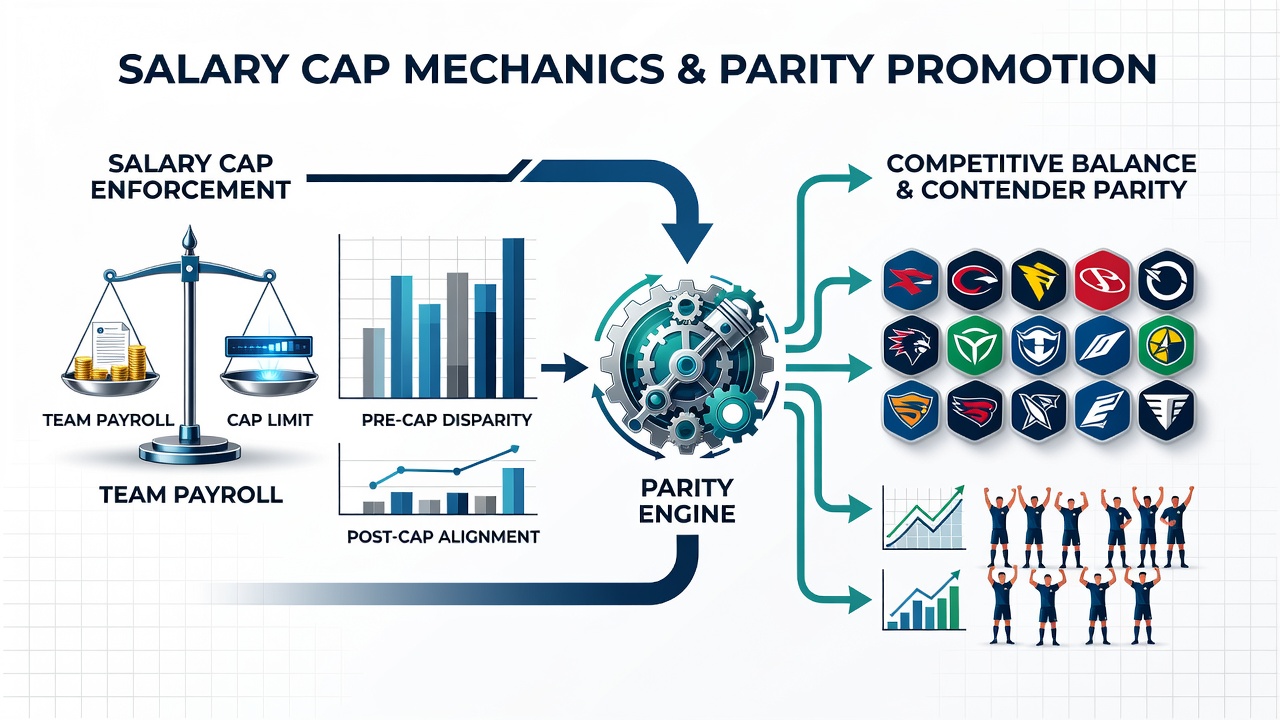
League statistics reveal that salary caps correlate with narrower gaps between the best and worst teams, and the NFL in particular has seen playoff appearances spread across more franchises since the cap era began in 1994. Figures from the league office indicate that between 1990 and 1993 only 14 different teams reached the postseason, whereas the 20 seasons after cap introduction featured 24 unique participants. NHL data shows a comparable pattern after the 2005 hard cap, with the number of teams finishing within five points of a playoff spot rising noticeably compared with pre-cap years. These patterns hold even when accounting for revenue differences, because the cap forces organizations to prioritize draft development and smart trades over simply outbidding rivals for established stars.
Challenges and Ongoing Refinements
Front offices continuously test the boundaries of cap rules through contract structuring, and leagues respond with new regulations aimed at closing loopholes such as back-loaded deals or long-term injured reserve placements. In June 2026 the NFL owners are scheduled to review proposals that would tighten rules on signing bonus proration, and similar discussions continue in the NBA regarding the treatment of two-way contracts and their impact on cap space. These adjustments keep the system responsive to evolving roster-building tactics while preserving the core goal of preventing any small group of teams from dominating for extended periods.
Conclusion
Salary cap mechanics function as deliberate design features that redistribute talent opportunities across contending organizations, and the measurable outcomes appear in playoff diversity and reduced dynasties in leagues that enforce them. Continued monitoring and periodic rule tweaks ensure these systems adapt to new financial realities without losing their fundamental role in sustaining competitive equity.