Global Talent Influx Transforming Rosters in North American Pro Sports
Written by Quinn Baumann · Jul 12, 2026
Global Talent Influx Transforming Rosters in North American Pro Sports
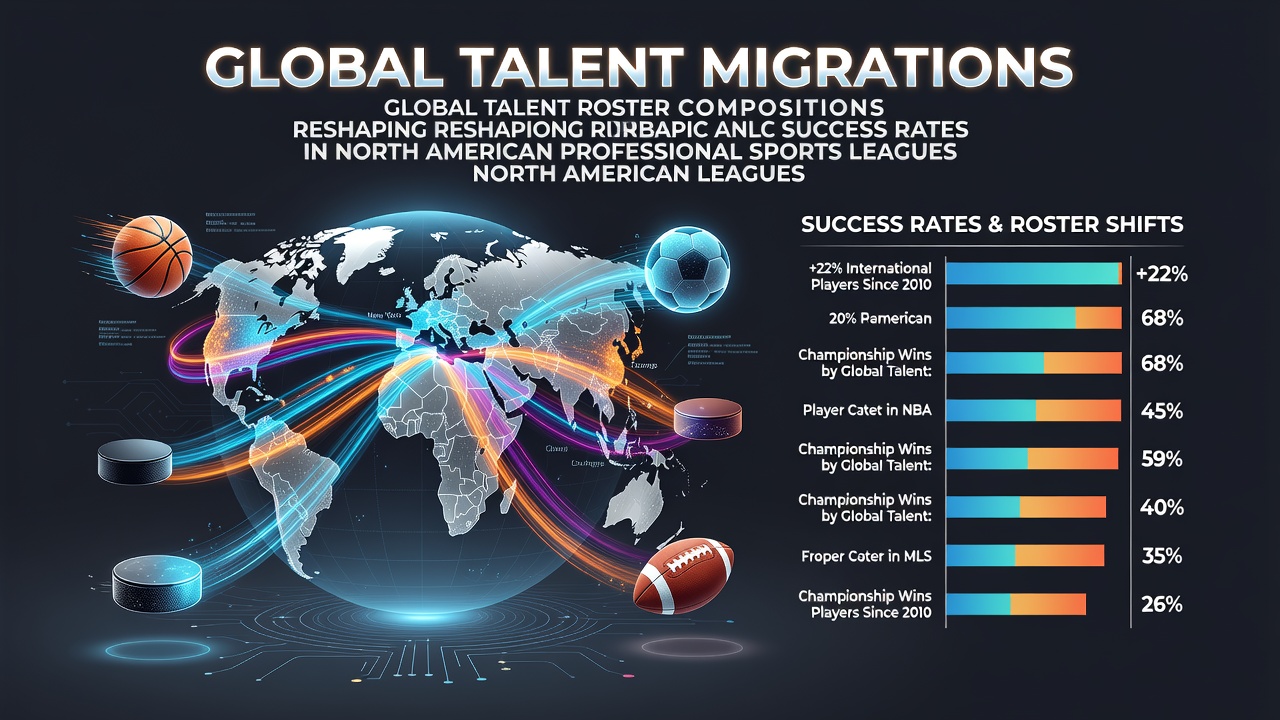
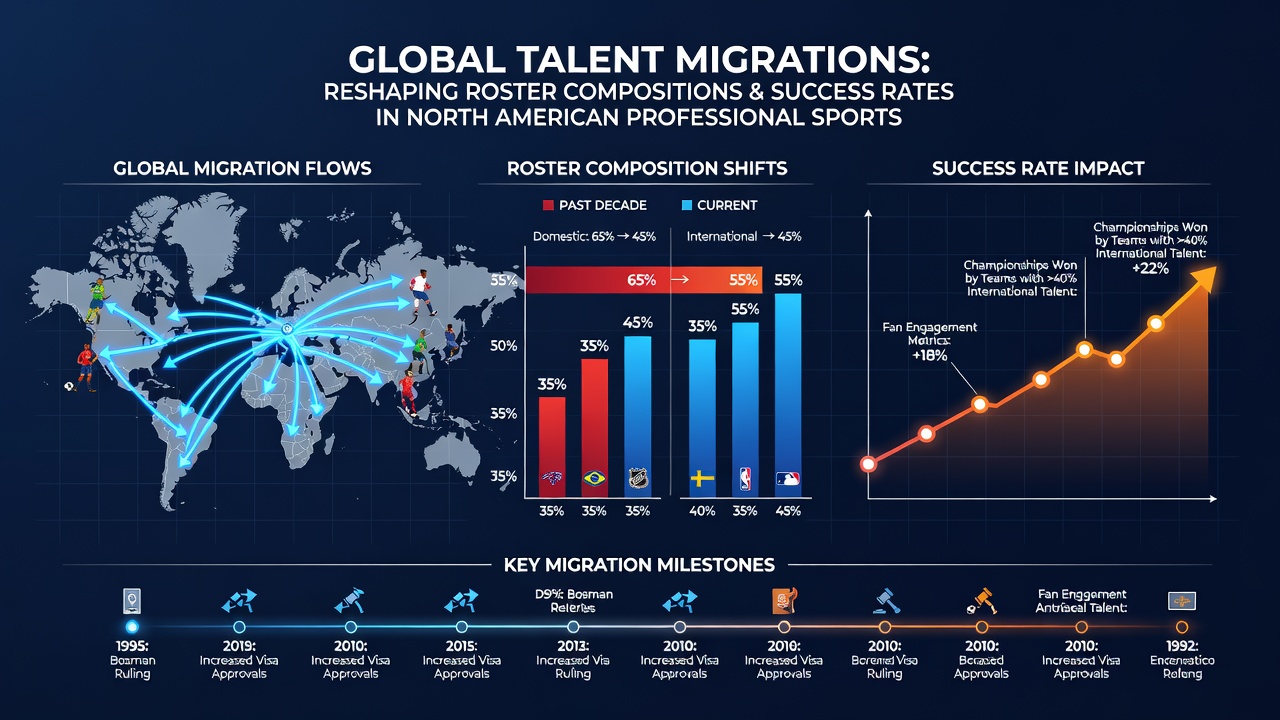
International player movements have accelerated across major North American leagues in recent years, bringing athletes from Europe, Latin America, Asia, and Africa into team structures that once relied almost entirely on domestic talent pools. Data from league records shows steady growth in foreign-born participants, particularly in the NHL where European nationals now comprise over 25 percent of active rosters according to official league statistics. Similar patterns appear in Major League Baseball where players from the Dominican Republic, Venezuela, and other Caribbean nations fill nearly 30 percent of roster spots, while the NBA has documented rising numbers of athletes from France, Australia, and several African countries entering drafts and free agency markets.
League-Specific Migration Trends
Observers tracking roster changes note distinct regional sources feeding each sport. The NHL draws heavily from Sweden, Finland, Russia, and the Czech Republic, with teams in July 2026 actively signing prospects from these nations during the summer free agency period that follows the annual draft. MLB organizations maintain extensive scouting networks in Latin America that funnel young players through academies before they reach the majors, and those pipelines have produced multiple All-Star selections in recent seasons. The NBA meanwhile sees increasing arrivals from Europe via the draft and two-way contracts, while the NFL continues to feature the smallest percentage of international players though a handful of athletes from Germany, Nigeria, and Australia have secured roster spots through specialized training programs.
Success metrics tied to these migrations reveal measurable shifts in team performance. Research from sports analytics groups indicates franchises with higher percentages of international players often post improved regular-season win totals in the NHL and MLB, though causation remains complex because front-office strategies, coaching, and salary cap management also influence outcomes. In the NBA, teams that integrated multiple European and Australian contributors during the 2025-2026 season reached the playoffs at rates slightly above the league average, according to compiled game logs and roster data.
Impact on Roster Construction and Depth
Front offices now allocate significant resources to international scouting departments, and this investment has altered how general managers build depth charts. Rather than filling every position through college or high school pipelines, clubs routinely pursue players who developed in overseas professional leagues. The result appears in expanded bench options and specialized skill sets that were less common a decade earlier. For example, European-trained defensemen in the NHL frequently bring advanced puck-moving abilities that complement North American styles, while Latin American position players in MLB often demonstrate plate discipline and base-running instincts developed in winter leagues.
These additions also affect contract structures and development timelines. Many international signees arrive with prior professional experience, allowing teams to accelerate their transition to starting roles. League records show shorter average paths from signing to regular playing time for certain cohorts compared with domestically drafted athletes. At the same time, cultural adaptation programs and language support services have become standard offerings within team operations to ease integration.
Performance Data and Competitive Outcomes
Statistical reviews compiled by independent research organizations reveal correlations between roster diversity and specific performance indicators. In the NHL, teams with elevated European representation have recorded higher power-play efficiency percentages in multiple recent seasons. MLB clubs with substantial Latin American lineups post above-average on-base percentages in several divisions. The NBA has seen international players contribute disproportionately to three-point shooting volume on contending teams during the 2025-2026 campaign. While these patterns do not guarantee championships, they contribute to sustained contention windows for organizations that maintain robust global scouting operations.
July 2026 free agency and trade activity further illustrated the trend, as multiple clubs executed signings of players from previously underrepresented countries. The moves reflected ongoing adjustments to roster formulas that prioritize skill profiles developed outside traditional North American pathways. Tracking services documented an uptick in such transactions compared with the same period in prior years.
Conclusion
Global talent migrations continue to expand the talent base available to North American professional sports leagues, producing measurable changes in roster makeup and contributing to competitive outcomes across seasons. League data and scouting reports show sustained growth in international participation that began years earlier and shows no sign of slowing. Organizations that invest in worldwide talent identification maintain broader options for building balanced lineups, while performance indicators reflect incremental advantages in specific statistical categories. The pattern remains consistent across the NHL, MLB, NBA, and to a lesser extent the NFL, where international recruitment continues at a more measured pace.