Franchise Shifts That Redefined League Power Structures
Written by Mia Hughes · Jun 12, 2026
Franchise Shifts That Redefined League Power Structures
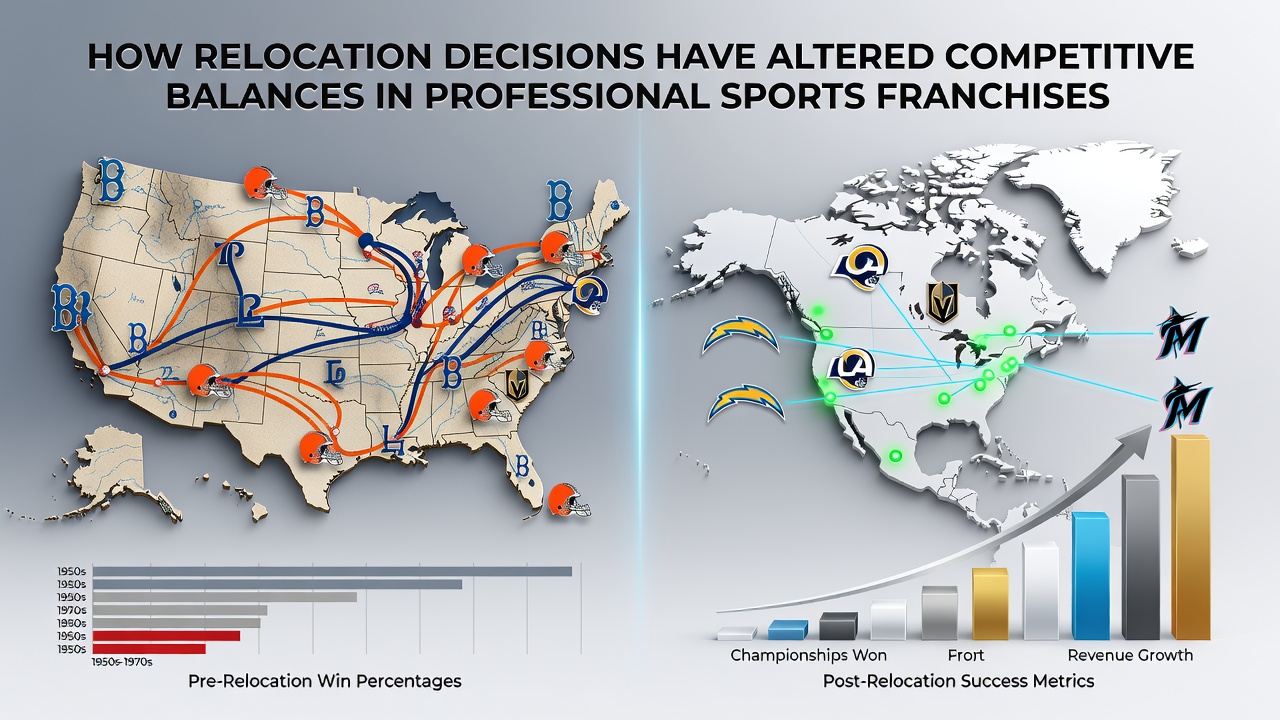
Professional sports leagues have witnessed numerous franchise relocations over decades, each one reshaping competitive dynamics through shifts in market access, revenue streams, and roster construction capabilities. Teams that moved from smaller markets to larger ones often gained financial advantages that translated into higher payroll flexibility while those departing established regions left behind loyal but limited fan bases that affected long-term stability.
Historical Patterns Across Major Leagues
MLB saw significant movement in the mid-20th century when the Brooklyn Dodgers and New York Giants relocated to California in 1958, opening new western markets that expanded television revenue potential and altered divisional alignments for decades to follow. The Boston Braves' move to Milwaukee in 1953 demonstrated how relocation could immediately boost attendance figures and local broadcasting deals, allowing the franchise to compete more effectively against established eastern powers. Observers note that such moves frequently coincided with league expansion periods, creating ripple effects where remaining teams adjusted their scouting territories and minor league affiliations to compensate for lost regional talent pipelines.
NFL relocations followed similar trajectories, with the Baltimore Colts' departure to Indianapolis in 1984 providing the franchise access to a larger media market that supported increased stadium financing and player acquisition budgets. The Oakland Raiders' multiple moves, including their eventual settlement in Las Vegas by 2020, highlighted how relocation decisions could unlock state-backed infrastructure investments that reduced operational costs and freed resources for competitive enhancements. Data from league records shows that franchises entering new territories often experienced initial spikes in season ticket sales and corporate sponsorships, which directly influenced their ability to retain star players during free agency periods.
Revenue Sharing and Payroll Implications
Modern collective bargaining agreements incorporate revenue sharing mechanisms that partially offset the advantages gained through relocation, yet disparities persist because new market teams frequently negotiate favorable lease terms at state-of-the-art facilities. The NHL's experience with the Winnipeg Jets' return from Atlanta illustrated how relocation into Canadian markets with strong hockey traditions could generate consistent gate revenue even without massive television contracts, enabling sustained competitiveness through targeted draft strategies rather than high-profile free agent signings. Researchers at various sports economics programs have documented that teams relocating to Sun Belt cities often benefit from population growth trends that expand their local television territories over time, creating compounding advantages in subsequent collective bargaining negotiations.
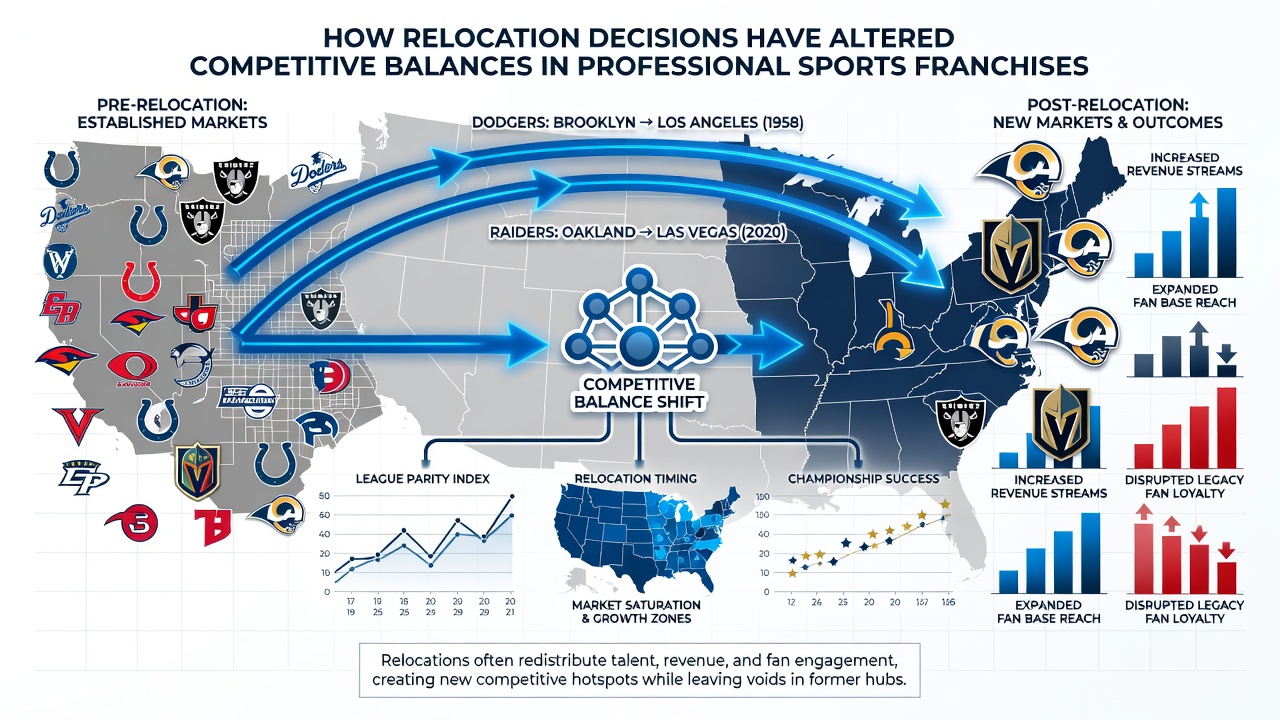
By June 2026, several leagues continued evaluating relocation proposals amid shifting demographic patterns and stadium lease expirations, with particular attention on how market size correlates with playoff appearance frequency across rolling five-year windows. NBA franchise movements, such as the Seattle SuperSonics' relocation to Oklahoma City in 2008, produced measurable changes in draft lottery positioning and international scouting investments as the new market developed its basketball infrastructure from scratch. Those who've studied franchise economics point out that relocation often disrupts established rivalries while creating fresh geographic alignments that influence scheduling and division realignments for years afterward.
Long-Term Competitive Adjustments
Franchises that successfully navigate relocation typically invest heavily in community integration programs to accelerate fan base development in their new locations, which indirectly supports on-field performance through improved draft positioning when early struggles occur. The St. Louis Rams' move to Los Angeles demonstrated how access to entertainment industry partnerships could enhance marketing capabilities and player retention efforts, though initial on-field results varied until roster continuity stabilized. Evidence suggests that relocation effects compound differently depending on whether teams move within the same conference or cross into new competitive environments, affecting everything from travel schedules to regional scouting networks.
League offices have developed increasingly sophisticated relocation criteria that consider not only immediate market size but also projected population growth and corporate presence, recognizing that these factors influence a team's ability to maintain competitive payrolls over multiple seasons. The reality is that successful relocations often require coordinated efforts between ownership groups, municipal governments, and league officials to ensure infrastructure supports sustained operations rather than short-term gains.
Conclusion
Relocation decisions continue to serve as pivotal moments that redistribute competitive resources across professional sports, with outcomes depending on execution quality, market reception, and alignment with broader league economic structures. Teams that leverage new locations effectively often establish multi-year advantages in talent acquisition and facility development, while those facing integration challenges may require several seasons to regain previous competitive footing. The patterns established through decades of franchise movements provide ongoing case studies for how market dynamics intersect with on-field performance across all major leagues.