Engineering the Edge: Climate and Surface Tactics in Professional Sports Venues
Written by Rafael Richter · Jun 7, 2026
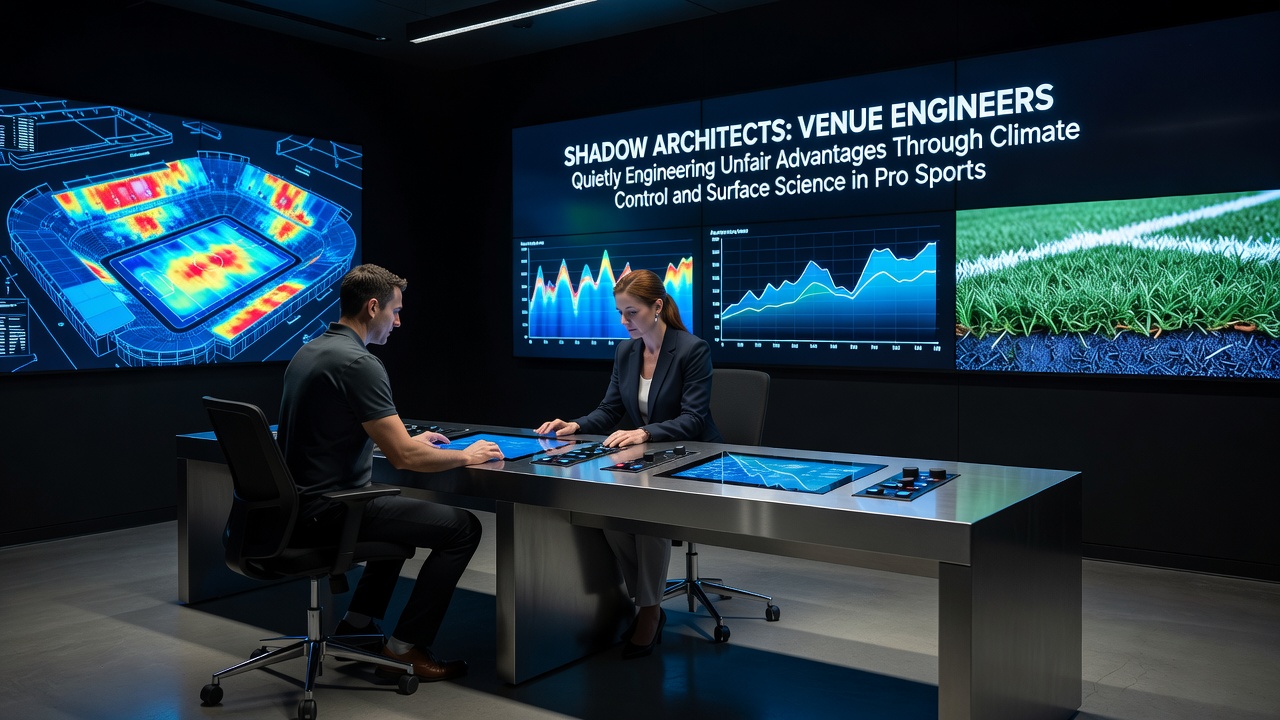
Engineering the Edge: Climate and Surface Tactics in Professional Sports Venues
Venue engineers across major leagues apply precise adjustments to temperature, humidity, air flow, and playing surfaces that create measurable differences in game conditions, and data from multiple sports shows these interventions influence player performance, ball behavior, and injury rates in consistent patterns. Research indicates that facilities in the NBA, NFL, NHL, MLB, and international soccer circuits maintain dedicated teams focused on environmental variables, often operating under league guidelines that permit wide ranges of acceptable parameters.
Climate Systems and Their Measurable Effects
Indoor arenas use HVAC configurations that shift air temperature by several degrees and alter humidity levels within hours before events, while outdoor stadiums deploy retractable roofs, misting systems, and subsurface heating that produce similar targeted results. Studies from sports science programs reveal that lower humidity environments correlate with faster ball speeds in basketball and baseball, whereas elevated moisture levels can slow surface friction in soccer and tennis. Engineers calibrate these settings based on team preferences and historical performance metrics, and records from league operations show that such modifications occur routinely without public disclosure of exact settings.
Observers note that facilities hosting multiple sports maintain separate protocols for each, and transitions between events require rapid recalibration of cooling zones and ventilation patterns. In June 2026, several NHL teams prepared for playoff games by lowering ice surface temperatures below standard levels to increase puck speed, a practice documented in arena maintenance logs and referenced in post-season technical reviews. Data collected by independent monitoring groups indicates that these adjustments can change puck velocity by up to five percent, which affects passing accuracy and shot timing for visiting squads unaccustomed to the conditions.
Surface Science and Material Modifications
Grounds crews and materials specialists select grass varieties, infill compositions, and synthetic turf densities that alter bounce, roll, and grip characteristics. In MLB, groundskeepers adjust soil moisture and clay content on infields to influence how ground balls behave, and similar techniques appear in soccer where pitch managers vary grass length and root structure to favor teams with particular playing styles. Research published through academic partnerships shows that harder surfaces increase sprint distances while softer profiles reduce impact forces but slow directional changes.
Engineers also integrate subsurface sensors that track moisture migration and temperature gradients, allowing real-time corrections during games. One study conducted at an Australian sports institute documented how different turf preparations changed average ball travel distances by measurable margins in controlled trials. These findings align with observations from European soccer leagues where pitch reports submitted to governing bodies reveal consistent variation in surface hardness readings across venues.

League Regulations and Oversight Practices
Governing bodies establish minimum and maximum thresholds for environmental conditions yet leave substantial discretion to venue operators within those bounds. The International Olympic Committee maintains environmental guidelines for indoor facilities that emphasize athlete safety while permitting variation in temperature and humidity settings, and similar frameworks exist in North American leagues. Reports from the Canadian Centre for Ethics in Sport highlight how monitoring equipment installed in competition venues captures deviations that fall inside permitted ranges but still produce competitive distinctions.
Teams employ consultants who analyze opponent statistics against specific venue conditions, and this information informs pre-game preparation routines. Data aggregation platforms used by front offices track performance splits tied to temperature, humidity, and surface metrics, enabling coaches to adjust lineups and strategies accordingly. Figures released by league analytics departments demonstrate that certain franchises maintain stronger home records under particular environmental profiles compared with road performances.
Equipment Interactions and Long-Term Patterns
Ball manufacturers and equipment suppliers design products that respond differently under varied climate and surface conditions, and testing protocols submitted to standards organizations reflect these variables. Engineers coordinate with these suppliers to ensure compatibility between venue settings and approved equipment, which creates layered advantages when home teams practice exclusively on their tuned surfaces. Longitudinal data collected across multiple seasons shows that visiting teams often require several quarters or periods to adapt to unfamiliar friction and rebound characteristics.
Researchers tracking injury patterns have identified correlations between surface firmness readings and lower-extremity strain rates, prompting some leagues to introduce mandatory reporting of pre-event measurements. These records, compiled by independent auditors, provide transparency while still allowing operators room to optimize within established limits.
Conclusion
Venue engineering practices centered on climate control and surface science operate as established components of professional sports infrastructure, supported by sensor networks, regulatory thresholds, and performance analytics that quantify their effects. Documentation from league operations, academic studies, and international sports organizations confirms that these interventions occur systematically across disciplines and continue to evolve with advances in monitoring technology and materials science.