Echoes in the Data: Statistical Footprints Left by Overlooked Contributors in Team Triumphs
Written by Quinn Baumann · May 31, 2026
Echoes in the Data: Statistical Footprints Left by Overlooked Contributors in Team Triumphs
Advanced analytics continue to uncover contributions from players and staff members whose impacts rarely appear in traditional box scores yet prove essential to championship runs across multiple leagues. Researchers at institutions like the University of Waterloo have documented how metrics such as adjusted plus-minus and expected goal differentials capture these subtle influences in basketball and hockey respectively while data from NBA tracking systems highlights bench players who elevate team efficiency during limited minutes.
Hidden Metrics in Professional Basketball
Role players in the NBA often generate positive impacts through defensive rotations and screen-setting that advanced tracking reveals even when scoring totals remain modest. Observers note that during the 2025-2026 season several teams reached the playoffs in May 2026 because of contributions from reserves whose hustle statistics and help defense numbers created measurable advantages in half-court sets. Studies from academic programs show these footprints accumulate over eighty-two games and become decisive in postseason series where every possession counts.
Contributions Across Baseball Lineups
Baseball offers clear examples through metrics like wins above replacement allocated to utility infielders and late-inning relievers whose cumulative value emerges in playoff matchups. Data compiled through long-term tracking demonstrates how overlooked contributors stabilize rotations and allow star pitchers to preserve energy for critical games. One study revealed that organizations prioritizing these secondary statistics built deeper rosters that sustained performance through extended championship windows.
Football and Soccer Analytics Patterns
In gridiron and pitch sports similar patterns appear where special teams units and set-piece specialists leave statistical traces through improved field position and chance creation rates. Figures from league-wide tracking systems indicate that these overlooked roles correlate with higher win probabilities in close contests although individual recognition remains limited. Analysts have observed that teams integrating such data into roster construction achieve more consistent results over multiple seasons.
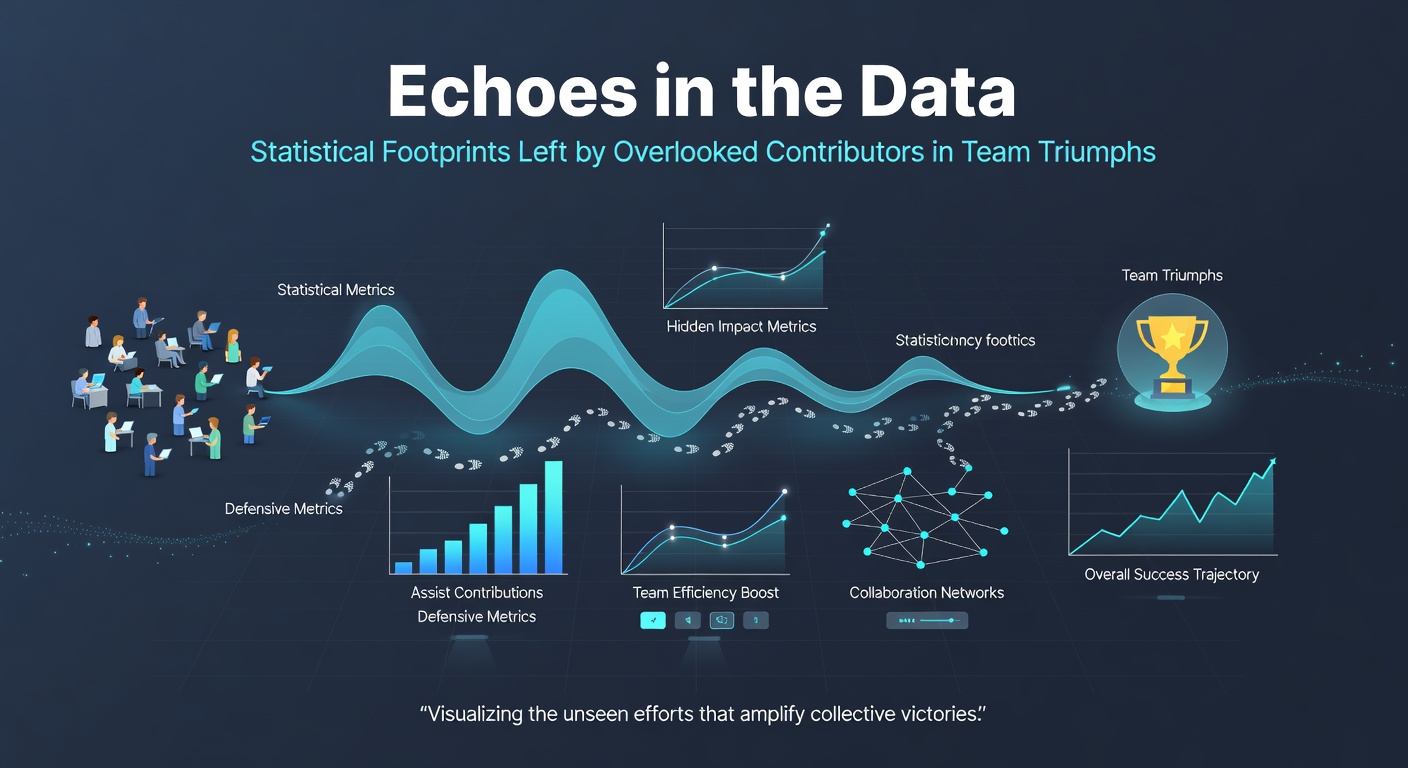
Coaching and Support Staff Influences
Beyond players the data also captures effects from assistant coaches and medical personnel whose preparation work translates into lower injury rates and optimized game plans. Evidence from performance research groups shows correlations between these behind-the-scenes elements and sustained success in high-stakes environments like the Stanley Cup playoffs and World Series. Those who've examined longitudinal datasets note that franchises investing in comprehensive analytics departments identify and retain talent that fills these gaps effectively.
Case Examples from Recent Seasons
Take one NHL club that advanced deep into the 2026 postseason largely because fourth-line forwards posted strong expected goal shares during limited ice time while penalty kill units operated above league averages. Similar stories surface in soccer where midfield anchors not known for goal tallies record high pass completion percentages in defensive zones that enable attacking stars to operate freely. Researchers discovered these patterns repeat across leagues when teams review granular data rather than surface-level highlights.
Future Directions in Sports Statistics
Emerging technologies including wearable sensors and machine learning models promise to refine detection of these overlooked footprints even further. Data from international competitions in May 2026 already demonstrates how integrating multiple data streams creates clearer pictures of team dynamics. Organizations that adopt these tools gain edges in identifying contributors who amplify collective performance without dominating individual leaderboards.
Conclusion
Statistical analysis continues to shift focus from headline performers toward the broader ecosystem of contributions that drive sustained victories. Teams leveraging these insights build more resilient structures capable of navigating the demands of modern schedules and playoff intensity. As datasets expand the echoes left by overlooked participants become increasingly audible in the record books of championship eras.