Architectural Edges: How Stadium Designs Have Quietly Shaped Home Advantages Across Professional Sports Leagues
Written by Yves Hoffmann · Jul 10, 2026

Architectural Edges: How Stadium Designs Have Quietly Shaped Home Advantages Across Professional Sports Leagues
Stadium architecture influences game outcomes in ways that extend far beyond basic seating capacity or aesthetics, with specific design choices creating measurable effects on team performance across major leagues. Data from multiple sports organizations shows that elements such as field dimensions, altitude levels, acoustic properties, and climate controls contribute to documented home advantages in MLB, NFL, NBA, NHL, and soccer competitions.
Researchers tracking performance metrics over decades note that certain venues consistently post higher win rates for home teams, and these patterns align with structural features rather than random variation. For instance, the thin air at Coors Field in Denver affects ball flight trajectories in baseball, while enclosed domes in other cities alter acoustics and temperature consistency during football and basketball games.
Dimensions and Sightlines in Baseball and Football
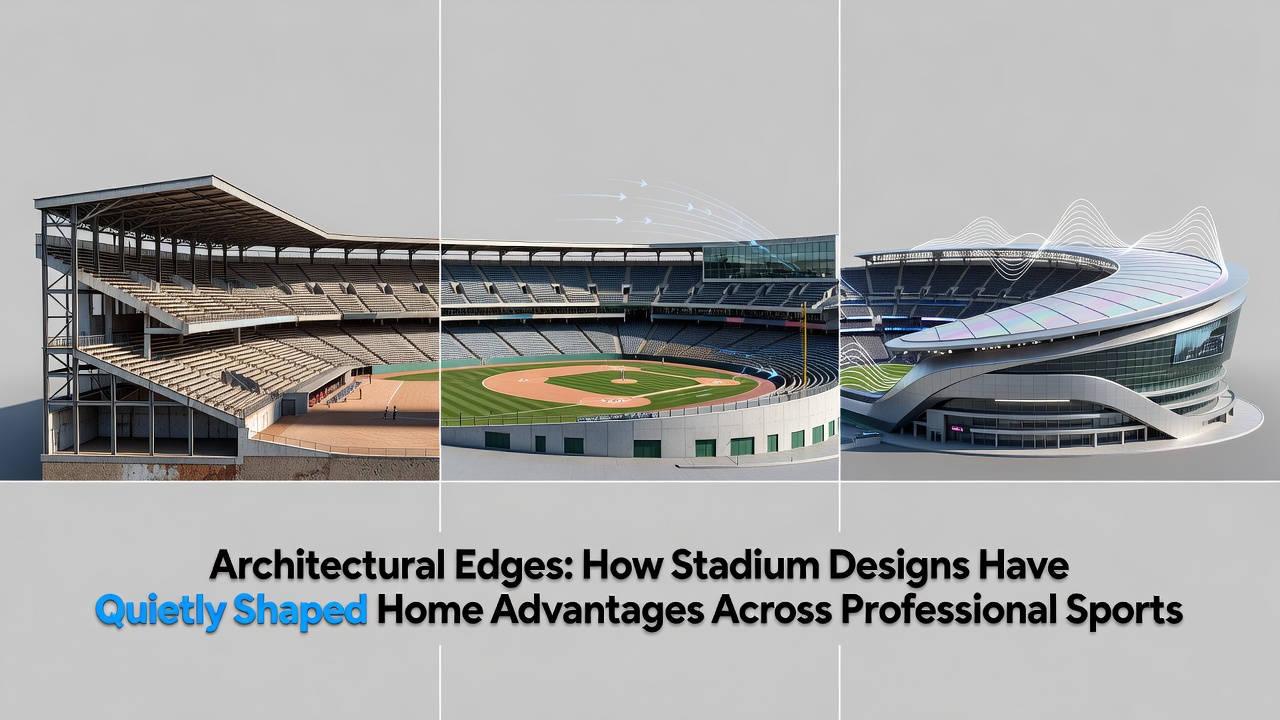
MLB ballparks demonstrate clear variations in outfield depths and wall heights that shape hitting and fielding statistics, with older structures like Fenway Park featuring the Green Monster that limits extra-base hits in left field while rewarding certain right-handed power. League records indicate that teams playing in asymmetric parks maintain different home run rates compared to those in symmetrical modern facilities, and visiting squads often adjust strategies accordingly during road series.
In the NFL, end zone designs and sideline proximities influence play-calling tendencies, particularly in stadiums where seating configurations place crowds closer to the action and increase noise levels that disrupt communication. Studies compiled by sports engineering groups reveal that these acoustic factors correlate with higher penalty rates for visiting offenses in specific venues, while home teams adapt through pre-snap signals developed over multiple seasons.
Altitude, Climate, and Enclosed Environments
Altitude presents another documented variable, with facilities above 5,000 feet showing elevated scoring in certain sports due to reduced air resistance. Data collected through 2025 seasons indicates that teams based at high elevations hold stronger records at home, while opponents require additional acclimation periods before games. Similar patterns emerge in soccer leagues where thinner air affects player endurance and ball movement over full 90-minute matches.
Climate-controlled domes and retractable roofs further modify conditions by maintaining consistent temperatures and humidity regardless of external weather, which benefits teams accustomed to indoor training regimens. NHL arenas with specialized ice surfaces and lighting setups also demonstrate slight variations in puck speed and visibility that home clubs leverage through practice routines tailored to their specific rink dimensions.
Crowd Proximity and Acoustic Design
Seating layouts that position spectators nearer to playing surfaces amplify crowd noise, creating communication challenges for visiting players during critical moments. NBA arenas with steep upper decks and lower bowl configurations generate decibel levels that correlate with increased turnover rates for road teams, according to performance analyses from league tracking systems. Soccer stadiums in Europe often feature steep stands that concentrate sound waves toward the pitch, and records from UEFA competitions show measurable differences in home win percentages tied to these structural traits.
Design choices involving video boards, lighting arrays, and reflective surfaces also contribute to visual distractions or enhanced sightlines for home players who train regularly in those conditions. Observers tracking player adaptations note that familiarity with glare patterns or shadow placements gives local teams an incremental edge during late-game situations when fatigue sets in.
Recent Developments and Data Trends
As of July 2026, several new and renovated venues have incorporated advanced materials and layouts informed by prior performance data, with some introducing variable field configurations or enhanced sound-dampening features. League statistics continue to reflect persistent home advantages even as construction techniques evolve, suggesting that core architectural principles maintain their influence across updated facilities in multiple sports.
Academic analyses from institutions such as those affiliated with Sports Science Australia and European research networks have examined these variables through controlled comparisons, revealing that design elements interact with team preparation methods to produce consistent statistical disparities. These findings align with observations from North American leagues where home records remain elevated despite standardized rules and travel accommodations.
Conclusion
Stadium designs across professional sports embed subtle but measurable factors that shape competitive outcomes through physical and environmental interactions. Records compiled over extended periods demonstrate that teams capitalize on venue-specific traits developed through repeated exposure, while visiting sides face adaptations that affect execution in measurable ways. Ongoing construction and renovation projects continue to reference these established patterns when planning future facilities.